Answering the question “which 5×7 car speakers should I buy?” this guide highlights top options that balance power, clarity, and value. These selections are best for car enthusiasts seeking improved midrange and vocal clarity, with some models leaning toward punchy bass. Ideal buyers include budget-conscious installers, weekend hobbyists upgrading factory setups, and listeners who want a noticeable upgrade without a full component system. The table below compares five compelling 5×7 options based on the core attributes most buyers compare: power handling, frequency range, and overall suitability for common vehicle dashboards.
| Product | Max Power / RMS | Best For | Note |
|---|---|---|---|
| BOSS Audio CH5730 | 300W per pair | Budget builds with solid midrange | 3-way design for broader coverage |
| DS18 GEN-X5.7 | 165W Max, 50W RMS | Clear vocals with detailed highs | 3-way with dual tweeters |
| CT Sounds BIO-5X7-COX | 160W Max | Balanced sound in compact footprint | Coaxial, value-focused |
| CT Sounds Meso 5×7 | 300W | Strong overall presentation | Premium 2-way coaxial |
| JBL Stage 38627 | — | Reliable daily driver with crisp highs | Custom-fit two-way |
BOSS Audio CH5730 5×7 Car Speakers

The BOSS CH5730 is a budget-friendly 5×7 three-way speaker system designed to deliver enhanced midrange and vocal clarity. It’s well-suited for drivers who want noticeable sound improvement without a large investment. Best for entry-level upgrades in vehicles with fixed factory speakers, or for replacing aging one-way units with a more capable three-way design. A potential limitation is that cheaper materials may not sustain very high volumes as cleanly as higher-end models, so use moderate listening levels for long-term reliability.
DS18 GEN-X5.7 Coaxial Speaker

The DS18 GEN-X5.7 5×7 is a three-way coaxial setup featuring a 25mm voice coil, dual tweeters, and a 9mm Mylar dome. It aims to deliver a balanced sound with clear mids and crisp highs while staying within an affordable price bracket. Best for listeners who want a noticeable upgrade in detail without the complexity of separate components. It’s best to avoid extreme boost on high frequencies if you don’t have an upgraded amplifier, as the tweeters can reveal harshness with excessive EQ.
CT Sounds BIO-5X7-COX 5×7 Coaxial

The CT Sounds BIO-5X7-COX offers a compact coaxial design with solid power handling suitable for budget-friendly upgrades. It’s a practical choice for those who want better-wide range performance without sacrificing space or breaking the bank. Choose this if you’re aiming for a straightforward install that still improves overall sound presence. A caution is that, as with many value-oriented models, extreme bass demands can distort if the enclosure and mounting aren’t optimized.
CT Sounds Meso 5×7 Premium Coaxial

The CT Sounds Meso 5×7 300W 2-Way Premium Coaxial is engineered for stronger overall output with better midrange and smoother highs than basic coaxials. It’s best for drivers who want a robust upgrade capable of handling more power while preserving a tight, musical presentation. Better for typical daily listening than very high-SPL shows, it can still deliver convincing dynamics when paired with a suitable amplifier. Note that 2-way designs may not reach the same extreme high-frequency detail as true 3-way systems.
JBL Stage 38627 5×7 / 6×8
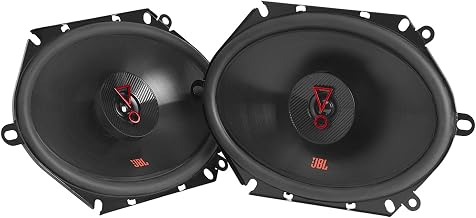
The JBL Stage 38627 is a two-way, custom-fit option designed to fit specific vehicle profiles. It emphasizes durability and reliable daily performance, offering crisp high frequencies and clear midrange. Best for owners seeking a straightforward upgrade with JBL’s reputation for dependable, wide-enjoyment sound. A limitation might be that fitment varies by vehicle, so confirm mounting depth and grill clearance before purchasing.
Buying Guide
- Speaker type: Coaxial versus three-way. Coaxial models are simpler to install and offer balanced sound, while three-way designs stretch higher mids and highs with more tweeters for detail.
- Power handling: Match the RMS rating to your amplifier or head unit. Higher RMS means cleaner power delivery but may require upgrading electronics to avoid distortion.
- Enclosure and mounting: Ensure your vehicle’s door or dash can accommodate the depth and mounting screws. Some 5×7 models fit direct factory locations; others require adapters.
- Tweeter design: Tweeter quality affects brightness and sibilance. Dual or dome tweeters can reduce harshness and improve dispersion in small cabins.
- Material durability: Look for midrange cones and surround materials that resist heat and humidity common in vehicles. Plastic or treated paper cones are common in budget models.
- Installation considerations: Upgrading wiring, adding a rear or separate subwoofer, and ensuring power from an appropriate amplifier can influence overall performance.
- Vehicle compatibility: Some vehicles require cutouts, grilles, or custom adapters for 5×7 speakers. Always check fitment notes for your car model.
Frequently Asked Questions
- Are 5×7 speakers worth upgrading? Yes, they provide better midrange clarity and overall balance compared with many factory speakers, especially in trucks and sedans with mid-sized speaker openings.
- Should I choose 3-way or 2-way for a 5×7 size? 3-way designs give broader coverage with better highs and midrange distribution, but require more power and proper mounting. 2-way coaxials are simpler and reliable in many setups.
- Do I need an amplifier for these speakers? Many 5×7 speakers perform well with a capable head unit, but an amplifier improves headroom and reduces distortion at higher volumes.
- What is a safe power range for these speakers? Look for RMS ratings that match your amplifier’s output. Exceeding the rated RMS by a small margin is possible with careful gain settings, but avoid sustained overdriving.
- Can I install these myself? Yes, many 5×7 speakers are designed for straightforward replacement, but some vehicles require mounting adapters or door panel work. Consult installation guides for your car.
- How do I choose the best 5×7 for my vehicle? Consider your listening preferences (vocal clarity, bass presence, high-frequency detail), your budget, and how much power you can safely provide through an amplifier or head unit.