Answering the common need for robust lawn care, this guide highlights the best aerator attachments for riding mowers. These tools help relieve soil compaction, promote root growth, and improve water and nutrient penetration. The top picks below are best for homeowners with medium to large lawns, property managers maintaining multiple acres, and gardeners who want faster, more even soil aeration. Each product section explains who it’s best for and why it stands out, along with practical cautions to consider before purchase.
| Product | Best For | Why It Stands Out |
|---|---|---|
| Suchtale 40-Inch Tow Behind Spike Aerator | Large lawns, farms | Wide 40-inch working width with galvanized steel tines for durable soil penetration |
| VEVOR Tow Behind Plug Aerator, 32 in | Medium lawns, property owners | Plug-style aeration with heavy-duty build and universal hitch |
| 40-Inch Tow Behind Spike Aerator, 10 Tines | Rugged grounds, farms | Extra-wide tow bar and robust spike design for deep penetration |
| Suchtale 40-Inch Tow Behind Plug Aerator | Precision lawns, gardens | 24 coring plugs for thorough core aeration with universal hitch |
| YINTATECH 48-Inch Lawn Aerator Tow Behind | Large lawns, commercial use | Wider 48-inch working width for faster coverage |
Suchtale 40-Inch Tow Behind Spike Aerator
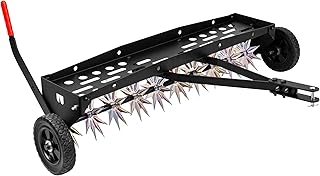
This spike aerator uses durable galvanized steel tines and a wide 40-inch working width. It is best for homeowners with expansive lawns or small farms where rapid coverage is beneficial. The extra-wide tow bar improves stability during transport and operation. Best for surface-level aeration to relieve compaction in dry or clay-heavy soils. A potential limitation is that spike aeration creates angled holes rather than cores, which may be less effective in deeply compacted soils.
VEVOR Tow Behind Plug Aerator, 32 in

This 32-inch plug aerator is designed for medium-sized lawns and gardens. It features a universal hitch for broad compatibility and a folded edge tray to manage soil during operation. Best for core aeration that leaves soil plugs on the surface to break down naturally. A caveat is that plug cores may require disruption to conceal them in very dry or compact soils, potentially slowing initial visible results.
40-Inch Tow Behind Spike Aerator, 10 Tines

This model combines a broad 40-inch working width with ten robust steel tines to penetrate the soil. It’s a strong choice for large lawns or farms where quick coverage matters. It’s best for users who prefer spike aeration to create channels for air and water movement rather than removing cores. Limitations include potential surface disturbance and less relief for severely compacted soils compared to core aerators.
Suchtale 40-Inch Tow Behind Plug Aerator

Equipped with 24 coring plugs, this attachment targets lawns, farms, and gardens that need thorough core aeration. The universal hitch allows easy compatibility with many riding mowers. Choose this if you want to remove plugs and improve soil composition. A potential limitation is that core aeration may require cleanup or reseeding depending on soil conditions and weather after aeration.
YINTATECH 48″ Lawn Aerator Tow Behind

With a 48-inch working width, this aerator is best for very large lawns or commercial settings where time-saving coverage matters. It is designed for spike aeration, providing channels that facilitate air, water, and nutrient movement. Best for users who need rapid landscape maintenance. A drawback to monitor is potential soil disruption on uneven ground; ensure the terrain is relatively level for best results.
Buying Guide: Key Considerations For Aerator Attachments
- Working width and tractor compatibility: Wider units cover more area but may require a heavier hitch and stronger towing capability. Check your riding mower’s hitch type and power to avoid strain during use.
- Spike vs plug aeration: Spike aerators create channels but do not remove soil cores, while plug aerators extract cores for soil mixing. Consider soil compaction severity and lawn goals when choosing.
- Hitch design and stability: Universal or adjustable hitches improve compatibility across brands. A stable tow bar reduces sway and improves uniform soil penetration.
- Durability of tines and trays: Galvanized steel tines resist rust and wear. A folded edge tray helps keep soil during operation and reduces clogging.
- Ease of maintenance: Look for units with simple parts, replaceable tines, and clear assembly instructions to minimize downtime.
- Terrain adaptability: For uneven ground, choose designs with flexible tines or shock-absorbing mounting to maintain consistent penetration depth.
Practical Comparison At A Glance
- Best for very large properties: 40 or 48-inch models with wide tow bars.
- Best for core aeration: Plug-style units with coring plugs often deliver deeper soil relief.
- Best for fast coverage: Spike aerators with multiple tines and wider widths.
- Best for universal hitch compatibility: Models advertising universal hitch simplify compatibility across brands.
FAQ
What is aerator attachment best used for on riding mowers?
Aerator attachments relieve soil compaction, improve root growth, and enhance water and nutrient penetration in lawns and gardens.
Should I choose spike or plug aeration?
Use plug aeration for core soil removal when soil is heavily compacted or when you want to improve soil structure. Spike aeration is faster and suitable for mild compaction when cores are not required.
Can I use these on any riding mower?
Most attachments are designed with universal or adaptable hitches, but always verify hitch compatibility and weight limits with your mower model.
How often should I aerate my lawn?
For most lawns, annual aeration is sufficient, with more frequent aeration in compacted soils or high-traffic areas.
Is maintenance required after aerating?
Clean debris, inspect tines for wear, and lubricate moving parts as recommended by the manufacturer to extend the attachment’s life.