Direct answer: for automotive air conditioning, the best choices balance accuracy, safety features, and automation. The top picks here are suited to shop-level technicians and DIY enthusiasts who want reliable recovery, recycling, and recharging of R-134a and related refrigerants. Each product below is selected for clear operation, solid performance, and practical safety features.
| Product | Best For | Why It Stands Out |
|---|---|---|
| Robinair 34288NI | Beginner to intermediate shops | High accuracy, SAE J2788 compliance, programmable vacuum |
| Airtek AC-Dual | Fully automatic jobs | Dual refrigerants, walk-away operation, strong recovery rate |
| VIVOHOME RR250 | Mid-range professional | Oil-less design, fast recovery, robust safety indicators |
| VEVOR 1 HP Dual Cylinder | Heavy-use environments | High-speed motor, wide display, precise readings |
| VEVOR Portable 3/4 HP | Lightweight, portable setups | Self-cleaning, multiple refrigerants, easy transport |
Robinair 34288NI Economy R-134a Recovery Unit

The Robinair 34288NI is designed for standard (non-hybrid) automotive A/C systems. It combines simple operation with precise accuracy, delivering recovery, recycle, evacuation, and recharge functions for R-134a. This model is noted for exceeding SAE J2788 standards in accuracy and efficiency, recovering more than 95% of refrigerant and charging within a tight margin of +/- 0.5 oz of the programmed charge. A programmable vacuum function defaults to 15 minutes and can be set up to 99 minutes, with a display showing time remaining. Best for shops or DIYers who want dependable performance without complexity, and for technicians who value consistent, documented recovery accuracy.
Best for: technicians who prioritize accuracy and easy operation in non-hybrid systems.
Limitation: only supports standard R-134a automotive systems; not listed for hybrid refrigerants in its main specification set.
Airtek AC-Dual Fully Automatic Machine
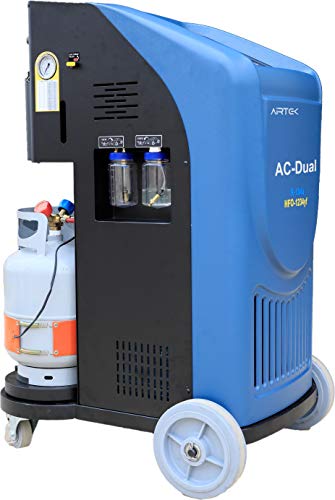
The Airtek AC-Dual is a fully automatic recovery and recharge system that supports both R134a and HFO1234yf refrigerants. It provides an automated workflow where you enter the required information and let the machine perform the recovery and recharge steps. The recovery rate is listed at 95%, and the dual refrigerant support makes it a flexible option for shops handling newer and older vehicle fleets. Best for: shops needing automation to handle mixed refrigerants with minimal manual intervention.
Limitation: automation may require initial setup and familiarization with the interface to fully leverage the walk-away feature.
VIVOHOME RR250 Refrigerant Recovery Machine

The VIVOHOME RR250 combines a 3/4 HP motor with an oil-less, air-cooled piston compressor to facilitate quick liquid and vapor refrigerant recovery. A larger condenser and fan improve cooling performance, and the unit includes a filter drier to remove moisture and impurities. It features three valves and dual-pressure gauges to monitor progress, along with a pressure warning panel for safety. Best for: technicians who want fast recovery with robust indicators and a compact, oil-free design. Caution: ensure compatibility with target refrigerants and observe the high-pressure safety features during operation.
VEVOR Refrigerant Recovery Machine, 1 HP Dual Cylinder

This VEVOR model uses a 1 HP dual-cylinder setup with a brushless motor and a large, easy-to-read display. It supports R410A liquids and provides push/pull operation, which speeds up recovery for large systems. The unit highlights low and high-pressure protections, and its wide measurement range (from -14.5 to 800 psi) helps technicians monitor recovery precisely. Best for: busy repair shops requiring fast recovery with strong safety protections. Limitation: the interface and setup may be more complex for casual DIY users.
VEVOR Portable 3/4 HP Refrigerant Recovery Machine

The VEVOR Portable 3/4 HP unit focuses on portability without sacrificing performance. It supports vapor and liquid recovery at a maximum rate of 4.85 lb/min and accepts multiple refrigerants, including R134a, R12, R401A, R401C, R410A, and R22. A self-cleaning system simplifies maintenance, and its lightweight build (about 29.5 lbs) with a handle makes it practical for on-site use. Best for: techs who need a portable, all-purpose recovery unit for varied refrigerants. Caution: verify the refrigerant compatibility for legal and safety compliance in your region.
VIVOHOME 110V 1/3 HP Vacuum Pump with Manifold Kit

This kit centers on vacuum evacuation with a 4 CFM pump and a single-stage rotary vane design. It is paired with a high-quality manifold gauge set for precise readings and includes a leak detector carry bag. Best for: professionals who want a reliable vacuum pump paired with accurate gauges for accurate system evacuation before charging. Limitation: primarily focused on vacuum and charging operations rather than full refrigerant recovery from multiple cars in a single workflow.
Buying Guide: Key Purchase Considerations
- Refrigerant compatibility: Confirm whether the unit supports R-134a, R-1234yf, R-410A, R22, or other refrigerants used in your vehicle fleet. Some machines are dual-refrigerant capable, which is advantageous for mixed workloads.
- Automation vs. manual control: Fully automatic machines save time on repetitive jobs but may require a learning curve. Manual or semi-automatic models offer hands-on control and can be better for occasional users.
- Recovery speed and efficiency: Look for stated recovery rates, vacuum function programmability, and whether the unit exceeds SAE standards. Higher recovery speeds reduce job time for frequent use.
- Safety features: High-pressure cutoffs, low-pressure protection, and automatic shut-off help prevent damage to equipment and reduce risk during operation.
- Display and diagnostics: Large, readable displays with clear pressure readings improve accuracy and reduce user error. Dual gauges can help with quick monitoring of liquid and vapor states.
- Portability and footprint: If you operate in multiple bays or field settings, weight and handle design matter. Budget-conscious buyers may favor compact, lightweight models.
- Maintenance features: Self-cleaning functions, filter driers, oil sight glasses, and accessible drain ports simplify routine upkeep and reduce downtime.
Frequently Asked Questions
- What is the difference between a refrigerant recovery machine and a full service A/C recharge station?
- Which refrigerants should I prioritize for modern vehicles?
- Are automatic recovery machines safer for DIY use?
- What maintenance steps keep a refrigerant recovery machine performing well?
- Can I use these machines for on-site work or in a shop environment?
Recovery machines remove refrigerant from a vehicle’s system, while recharge stations also add the precise charge after the system is evacuated and leak-checked. Some units combine both tasks in one workflow, while others separate recovery and recharge processes.
R-134a remains common in many older cars, while R-1234yf is becoming standard in newer models. Dual-refrigerant machines offer greater versatility for mixed fleets.
Automatic or semi-automatic machines reduce manual steps, which can minimize handling errors. However, proper training and adherence to safety guidelines are essential for any A/C work.
Regularly inspect and replace filters, monitor oil levels or sight glasses if applicable, clean the condenser and fans, and run purge cycles as recommended by the manufacturer to prevent moisture buildup and blockages.
Yes, several models are designed for portable use and field applications, but ensure compliance with local regulations and refrigerant handling guidelines in your area.