When buying an antibacterial spray for your car’s A/C system, you want a product that cleans, deodorizes, and reduces microbial buildup without leaving harsh residues. This guide highlights five top options designed for cars, trucks, and automotive HVAC systems. Each choice is explained for who benefits most, with clear pros, limits, and practical use tips. Whether you’re a daily commuter, a used-car dealer, or a DIY enthusiast, these picks help keep the cabin air fresh and the vents clear.
Summary table of selected products:
| Product | Best For | Key Benefit | Limitations |
|---|---|---|---|
| InterDynamics A/C Pro Vent & Duct Cleaner | Professional use; frequent cleaners | Powerful odor elimination | Professional-strength formula; may be concentrated for some users |
| Odor Removal AC Coil Cleaner (2-pack) | DIYers and dealers; deep cleaning | Foaming formula reaches evaporators | Two-pack option; foam expands |
| Armor All Car Air Freshener & Cleaner | Everyday drivers seeking simple refresh | Fresh scent plus cleaning action | Not a deep disinfection product—focuses on odor control |
| A/C Vent and Duct Cleaner (Foaming) | Weekly maintenance; quick freshen ups | Foaming spray with no rinse | May require multiple applications for heavy buildup |
| Odor Removal AC Coil Cleaner (19 oz, 2-pack) | Dealers; bulk cleaning | Extended nozzle for hard-to-reach areas | Gentle foam; suited for odor removal rather than heavy disinfection |
InterDynamics Certified A/C Pro Vent and Duct Cleaner

Best for professional or heavy-use environments, this product targets vents and ducts with a deodorizing formula designed to neutralize odor-causing microbes. It suits automotive technicians, fleet managers, and DIYers who clean HVAC systems regularly. The odor eliminator focus is practical for stubborn smells like smoke, mold, or mildew. A potential limitation is its stronger concentration, which may require careful handling and ventilation during application.
Odor Removal AC Coil Cleaner for Cars 12.3 fl.oz (2pcs)

Best for DIYers and used-car dealers needing deep cleaning of evaporator coils, this dual-pack uses a foam that expands to reach hard-to-clean areas. It is well-suited for removing odors at their source, potentially reducing costly evaporator repairs over time. Caution: Foam cleaners can oversaturate ducts if overused; follow instructions to avoid residual moisture problems.
Armor All Car Air Freshener and Cleaner

Best for drivers seeking an all-in-one refresh, this product combines an odor eliminator with a cleaning spray in a convenient form. It’s ideal for daily use in cars, trucks, and SUVs where quick, non-technical maintenance is preferred. A limitation is that it emphasizes fragrance as well as cleaning; for those seeking heavy disinfection, pairing with a dedicated sanitizer may be beneficial.
A/C Vent and Duct Cleaner | Foaming Spray

Best for quick freshening and routine maintenance, this foaming spray cleans dust build-up and freshens airflow with a no-rinse formula. It’s suitable for owners who perform regular cabin air maintenance. Limitation: may not fully disinfect mold or mildew without a dedicated antimicrobial product in the system.
Odor Removal AC Coil Cleaner for Cars 19oz (2pcs)
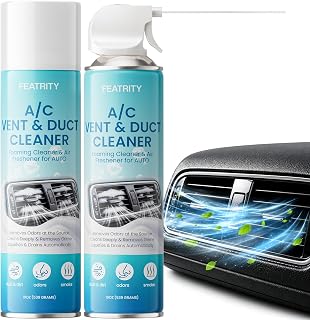
Best for dealers and DIYers needing bulk cleanup, this larger canister set offers an extended nozzle for reach and a gentle foam formula that removes odors at their source. It remains a wipe-free, no-rinse option focused on odor control rather than long-term antimicrobial protection. Choose this if you require more quantity per purchase and broader coverage.
Buying Guide: Key Purchase Considerations
- What is your main goal? Odor removal, deep cleaning of coils, or ongoing maintenance? Choose a product that aligns with your primary need: deep deodorizing versus regular freshening.
- Is the formula appropriate for your system? Some cleaners are designed for evaporator coils and vents, while others target broader duct surfaces. Ensure compatibility with automotive HVAC materials.
- How often will you use it? For frequent cleaning, a no-rinse foaming spray can save time; for occasional use, a deep-cleaning product may be more effective.
- Is there a risk of over-saturation? Foaming formulas can overflow into ducts if over-applied. Follow spray directions and use caution in tight spaces.
- Odor vs. disinfection: If smoke, mold, or mildew is a concern, pair odor-control products with an antimicrobial cleaner designed for automotive use.
- Ease of use: Look for sprays with simple application, clear directions, and minimal secondary cleanup requirements.
- Application area: For hard-to-reach areas, consider products offering extended nozzles or targeted foaming to maximize coverage.
FAQ
- What is the difference between odor eliminators and antibacterial sprays for car A/C?
- Can I use these products on the entire car interior?
- How often should I treat my car’s A/C system?
- Are these products safe for all vehicle types?
- Do these products require professional installation or tools?
- Can I combine odor removal with disinfection?
Odor eliminators target smells by neutralizing odor-causing compounds, while antibacterial sprays focus on reducing microbial presence that can degrade air quality. Some products blend both functions, but check the label for antimicrobial claims.
Most are designed for the A/C system, vents, and ducts. Some aerosol sprays can be used on interior surfaces, but always follow the manufacturer’s directions to avoid damage.
For routine maintenance, a quarterly treatment is common. High-use vehicles or persistent odors may require more frequent cleaning.
Most automotive cleaners are formulated for standard vehicle HVAC materials. Always verify compatibility with your make and model if you have a specialized or sensitive system.
Generally no. Most A/C vent cleaners are user-friendly and do not require tools. For heavy contamination or persistent issues, consider professional service.
Yes, but ensure you choose products that explicitly advertise antimicrobial or antibacterial properties and follow safe usage guidelines to avoid residues.