Looking to upgrade a standard bike into a lightweight motorized ride? This buyer’s guide highlights five popular bicycle moped conversion kits that fit 26–28″ bikes and offer different power levels, from electric to gasoline. It’s ideal for DIY enthusiasts, commuters who want a boost, or hobbyists curious about motorized biking. The selections emphasize ease of installation, reliability, and value, helping you choose the right kit for your riding goals.
Summary of chosen products:
| Product | Power Type | Wheel Size | Best For |
|---|---|---|---|
| IMAYCC Bike Motor Kit 100cc | Gasoline 2-stroke | 26–28″ | Riders seeking strong speed and longer-range capability |
| Electric Bicycle Motor Kit, 24V 250W | Electric | 16–28″ | Urban riders wanting simple DIY conversion |
| 26-Inch Electric Bike Conversion Kit, 48V 1000W | Electric | 26″ | Higher power, road/mtb versatility |
| Electric Bike Conversion Kit, 48V 1000W (Rear Hub) | Electric | 26″ | Balanced rear-drive performance |
| 110CC 2-Stroke Bicycle Engine Kit | Gasoline 2-stroke | 26″/28″ | Maximum speed and fuel autonomy |
IMAYCC 100cc Bike Motor Kit for 26–28″ Bikes

Best for riders seeking higher engine-powered acceleration and longer outdoor rides. This kit includes a 2-stroke single-cylinder engine rated at 2 kW and 6500 rpm, with a 44-tooth sprocket and 110-link chain for robust performance. It is optimized for 26–28″ bikes and designed for outdoor use with improved durability.
- Best for: speed-focused rides and longer outings.
- Why selected: strong power output in a compact, bike-friendly package.
- Caution: installation requires basic hardware skills and 2–4 hours; consult the included instructions and online tutorials for first-time setup.
24V 250W Electric Bicycle Motor Kit

Best for urban commuters and DIY enthusiasts who want a straightforward electric upgrade. This kit includes a 24V 250W motor, chain, freewheel, controller, mounting plate, and throttle. It fits 16–28″ wheels and is built with durable aluminum and steel components for reliable daily use.
- Best for: simple, lower-power e-bike conversions.
- Why selected: complete kit with essential accessories and broad wheel compatibility.
- Caution: performance depends on proper installation; follow the included manual or consult the supplier if unsure.
26-Inch 1000W Rear Hub Electric Kit

Best for riders who want powerful, rear-drive electric assistance. The 1000W gearless hub motor delivers up to 33 mph with a 45 N·m torque, supported by a 36-spoke wheel design for durability. The kit includes a thumb throttle, PAS sensor, and a controller bag for convenient setup.
- Best for: performance-minded riders on roads or light trails.
- Why selected: high power with smooth, low-noise operation.
- Caution: relies on proper wheel build and calibration; ensure your frame supports the additional load.
48V 1000W Rear Hub Electric Kit for 26″ Bikes
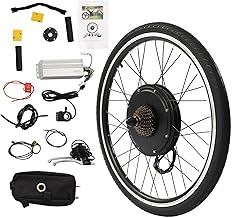
Better for riders seeking a balance of power and ease of use on mixed terrains. The kit provides 440 rpm, up to 53 km/h, and a safety-focused design with a power-off brake lever. It comes with a pedal-assist sensor and thumb throttle to support a natural riding feel.
- Best for: a versatile, high-performance upgrade without complicating wiring.
- Why selected: strong torque and efficient operation; suited for road and mountain conditions.
- Caution: higher power requires careful braking and frame assessment for safety.
110CC 2-Stroke Bicycle Engine Kit

This kit turns a standard bike into a gasoline-powered micro-motorcycle with a 2-stroke engine and a 2L fuel tank for longer trips. It delivers up to 6,000 rpm for efficient performance on commutes and short journeys.
- Best for: riders needing high-speed capability and extended range on a gasoline-powered setup.
- Why selected: robust engine kit with a complete parts package for straightforward installation.
- Caution: requires careful fuel system setup and adequate clearance for the engine on the bike frame.
Buying Guide
How to choose the right bicycle moped kit depends on your goals, budget, and maintenance preferences. Consider these key factors:
- Power source: electric vs. gasoline. Electric kits are typically cleaner and quieter; gasoline kits offer higher peak power and longer range between refuels.
- Wheel compatibility: confirm wheel size (26–28″ for most kits) and whether your bike’s frame can accommodate the weight and mounting hardware.
- Installation complexity: some kits require basic mechanical skills and several hours; others come with plug-and-play components. Review included tools and instructions.
- Braking and safety: ensure your braking system matches the added speed and weight. Some kits include brake levers or sensors to help with safety.
- Weight and balance: heavier engines or motors can affect handling and tire wear; ensure your frame and spokes can handle the load.
- Maintenance needs: gasoline kits require fuel management and more frequent maintenance; electric kits require battery care and charging considerations.
- Availability of support: check for installation tutorials, manuals, and vendor responsiveness if you run into setup questions.
FAQ
- What type of rider should consider a 100cc gasoline kit?
Best for riders who want strong acceleration and longer-range capability on 26–28″ bikes. - Are electric kits easier to install than gasoline kits?
Generally yes; electric kits are often simpler and lighter but may require battery management. - Do these kits fit standard 26–28″ bikes?
Most listed kits target 26–28″ wheels; always verify frame clearance and mounting points. - Is a rear hub motor better than a mid-drive kit?
Rear hub kits are easier to install; mid-drive provides balanced torque but can be more complex to mount. - What safety steps are essential after installation?
Test brakes, check torque on mounting hardware, and confirm throttle and sensor responses before riding. - Can I install multiple kits on one bike?
Not recommended; using more than one power source can complicate wiring and safety.