Answering the common buyer question, these ball-hitch bike racks are designed for easy setup, strong security, and broad vehicle compatibility. The best options fit standard 2″ receivers, offer anti-wobble features, and support multiple bikes without obstructing access to your rear. They’re ideal for weekend adventures, family trips, and daily commutes. The following picks emphasize stability, ease of installation, and value for money. Use the quick reference table to compare core specs at a glance.
Quick comparison table
| Product | Capacity | Hitch Type | Best For |
|---|---|---|---|
| MaxxHiul 50025 Hitch Mount 2 Bike Rack | 2 bikes / 100 lb | 1.25″ & 2″ adapters | |
| MaxxHaul 70210 4-Bike Rack | 4 bikes / 150 lb | 2″ receiver | |
| GOEHNER’s Upgrade 2.0 | 4 bikes / 240 lb | 2″ receiver | |
| Retrospec Lenox 2-5 | 2-5 bikes | 2″ receiver | |
| Amazon Basics 4-Bike | 4 bikes / 132 lb | 2″ receiver |
MaxxHaul 50025 Hitch Mount 2 Bike Rack
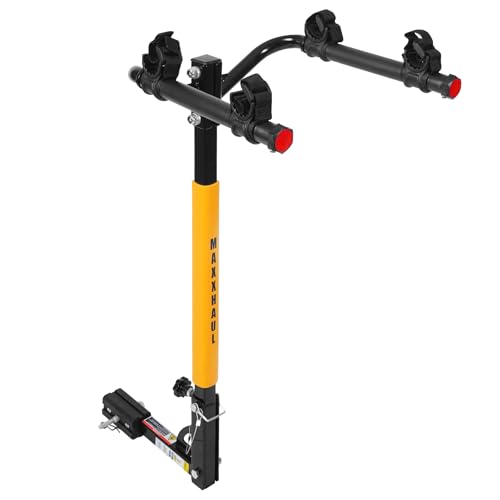
The MaxxHaul 50025 offers straightforward, durable transport for up to two bikes with a 100 lb capacity. It accommodates both 1-1/4″ and 2″ hitch receivers using a simple adapter, making it versatile across Class I–IV hitches. Improved rubber cradles and buckle-type straps help keep bikes stable on the road. Best for buyers who need a budget-friendly, compact rack for occasional trips.
Who it’s best for: small households or casual riders who want light to moderate-duty bike transport without heavy installation. Why chosen: reliable everyday performance with broad hitch compatibility and a compact footprint. Caution: heavier bikes or irregular frames may require careful strap adjustment to avoid frame contact.
MaxxHaul Hitch Mount 4 Bike Rack (70210)
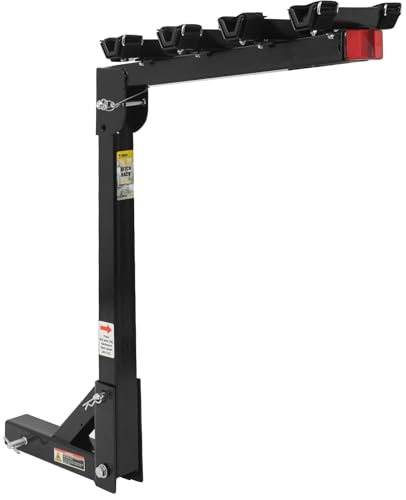
This MaxxHaul model supports up to four bikes with a total capacity of 150 lbs and includes a safety reflector for added visibility. The swing-down feature provides rear access for hatch openings and cargo loading. It’s designed for SUVs, minivans, and larger vehicles with a receiver hitch. Best for families with multiple riders or longer road trips.
Who it’s best for: households needing a higher-capacity rack without paying premium prices. Why chosen: strong capacity and convenient swing-down to access the rear, with straightforward installation. Caution: bulkier than smaller racks, which may affect handling and storage when not in use.
GOEHNER’s Upgrade 2.0 Hitch Bike Rack

Upgrade 2.0 presents heavy-duty stability with a stated 240 lb max load, designed to carry up to four bikes. It uses high-strength steel, six inches of space between bikes for clearance, and SGS-certified rubber straps for wear resistance. Folding arms and pin-locking tilt allow rear vehicle access without removing the rack. Best for riders who regularly haul heavier bikes or multiple bikes and want a balance of strength and ease of use.
Who it’s best for: riders with several or heavier bikes who need a sturdy, high-capacity rack. Why chosen: best overall high-load performance with thoughtful anti-sag design and tilt access. Caution: heavier weight and bulk may require assistance during loading for some users.
Retrospec Lenox 2-5 Bike Hitch Rack

Lenox 2-5 is a foldable steel frame bike rack that fits 2″ hitch receivers on cars, trucks, and SUVs. It features an anti-rattle adapter to reduce noise and bike wobble during transit. The carry arms fold downward for rear access, and the rack can fold up when not in use. Best for: users seeking a compact, easy-to-store option with reliable anti-wobble performance.
Who it’s best for: solo riders or small families who value storage ease and quiet rides. Why chosen: the anti-rattle design and foldable frame simplify daily use. Caution: some users may prefer higher capacity for larger families.
Amazon Basics 4-Bike Hitch Rack
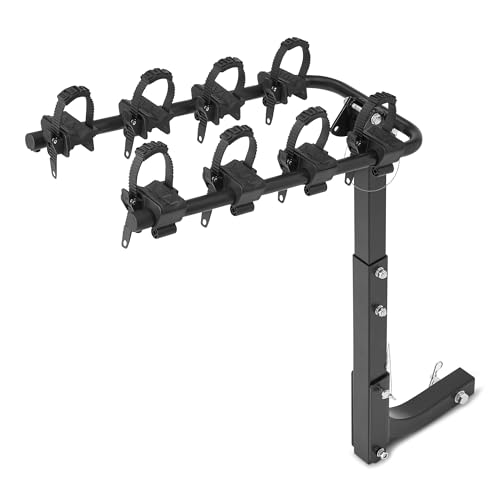
The Amazon Basics four-bike rack emphasizes value with a heavy-duty steel frame and a 132-pound total capacity. It uses a 2″ hitch and foldable arms for storage and access. It includes reinforced tie-downs for stable transport and anti-rattle stability for smoother rides. Best for budget-conscious buyers who still need reliable multi-bike transport.
Who it’s best for: cost-aware families or groups needing basic multi-bike transport. Why chosen: low price point with essential features like foldability and anti-rattle stability. Caution: may not offer the premium fit-and-finish of higher-priced rivals.
Buying Guide
- Hitch compatibility and class: Most ball hitch racks use 2″ receivers, but some models offer adapters for 1.25″. Confirm your vehicle’s hitch class and ensure the rack fits class I–IV as needed.
- Capacity and bike sizes: Choose a rack with sufficient weight capacity and space between bikes to avoid frame contact. Heavy or large frame bikes may require models with higher weight limits and wider spacing between arms.
- Access to rear cargo: Swing-down or tilting designs make trunk access easier. If you frequently load groceries or cargo, prioritize racks with easy tailgate access.
- Security and anti-wobble: Look for anti-rattle devices, locking hitch pins, and padded cradles to protect frames and reduce movement during transit.
- Storage and portability: Foldable racks save space when not in use. Weight matters for installation—lighter racks are easier to mount solo but may trade off some capacity.
- Frame compatibility: Some racks are better for certain frame types (step-through, oversized, carbon). Check cradle design and strap materials to avoid frame damage.
Frequently Asked Questions
- Do I need a special hitch for bike racks? Most bike racks use standard 2″ receiver hitches; some can adapt from 1.25″ to 2″. Verify your vehicle’s hitch size before purchase.
- Is a higher capacity rack better? Not always. Choose capacity based on your heaviest bikes and how many you transport regularly. Extra capacity adds weight and sometimes bulk.
- Are anti-wobble features necessary? Yes. Anti-wobble systems reduce frame movement and noise, improving bike stability on rough roads.
- Can I fold the rack with bikes loaded? Some models allow partial loading with arms folded for access, but always follow manufacturer safety instructions to avoid injury.
- How do I choose between 2-bike and 4-bike racks? Assess your typical trips: two bikes for quick commutes, four for family trips. Also consider your vehicle’s rear clearance and fuel efficiency impact.
- What maintenance is needed? Regularly inspect straps, cradles, and locking mechanisms. Keep metal components clean and dry to prevent rust.