Find effective options to remove car paint oxidation spots and restore color, gloss, and protection. This guide highlights five well-suited products for different needs, from heavy-duty boat-grade oxidization to safe, non-abrasive restoration. Ideal buyers include DIY detailers, professionals seeking deep correction, and weekend enthusiasts wanting a showroom-like finish. The table below summarizes the top picks to help you compare at a glance.
| Product | Best For | Key Benefit | Limitations |
|---|---|---|---|
| Meguiar’s M49 Heavy Duty Oxidation Remover | Heavy oxidation on gel coat and fiberglass surfaces | Powerful abrasive formula with feeder oils for showroom shine | Designed for specialized boat/RV finishes; may require careful use on automotive clear coats |
| Meguiar’s Professional M04 Heavy Cut Cleaner | Severe oxidation, scratches, and water spots | Aggressive correction with buffered lubrication to minimize swirl | Professional-grade; may require follow-up finer polish |
| Mothers California Gold Ceramic Paint Correction | Swirls, oxidation, water spots on automotive finishes | Professional-grade correction and prep for ceramic protection | Requires subsequent ceramic or wax application |
| Chemical Guys Heavy Duty Water Spot Remover Gel | Stubborn water spots on paint and glass | Thick gel formula clings to surfaces for tough stains | Gel may require longer dwell time for deep stains |
| Paint Deepoxidation Remover – 300ml | Deep oxidation and fading on all paints | Non-abrasive, safe for clear coats; multi-imperfection solution | Professional-grade formula; follow with proper sealant/ceramic |
Note: Each product targets oxidation and related blemishes with distinct formulations. Your choice should reflect the severity of oxidation, the surface type, and whether you plan to apply ceramic or wax protection afterward.
Meguiar’s M49 Heavy Duty Oxidation Remover
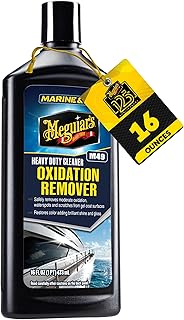
This versatile boat-focused compound quickly clears oxidation on gel coat and fiberglass surfaces, which are common on vehicles like boats and RVs. The formula uses diminishing polishing abrasives with feeder oils to leave a vibrant, showroom-like finish after treatment.
Best for: Owners with aged gel coat or fiberglass accents on marine or RV-adjacent vehicles seeking heavy oxidation removal and color restoration. Choose this for deep cleaning where standard waxes fall short.
Caution: While effective on specialized finishes, test on a small area first to avoid any unintended surface alteration on delicate automotive clear coats.
Meguiar’s Professional M04 Heavy Cut Cleaner

This professional-grade cleaner delivers serious defect removal, including heavy swirls, scratches, and severe oxidation. It uses aggressive abrasives for rapid correction, then shifts to a buffing rouge to minimize new swirls and scratches.
Best for: Detailers or DIYers dealing with deep scratches and heavy oxidation on clear-coated finishes that require substantial correction before finishing with a refinement polish or sealant.
Caution: Because of its aggressiveness, follow with a finishing polish to restore clarity and minimize haze on non-boat finishes.
Mothers California Gold Ceramic Paint Correction

This product concentrates on cutting and polishing to repair defects while refining the surface for a smooth, high-clarity finish. It also serves as an optimal prep step before ceramic protection, sealants, or wax.
Best for: Car owners seeking a professional-grade correction that prepares a surface for ceramic or long-lasting sealants, restoring depth and gloss while removing oxidation and light scratches.
Limitation: Requires additional application of ceramic coating or wax for long-term protection.
Chemical Guys Heavy Duty Water Spot Remover Gel

This thick gel targets stubborn water stains on paint, glass, and metal surfaces while being safe for clear coats. It clings to vertical surfaces to maximize contact with mineral marks and is ideal for pre-wax or pre-ceramic prep.
Best for: DIY detailers dealing with tough water spots that resist standard cleaners, especially on glass and painted panels. Choose this when gel form helps dwell time on vertical surfaces.
Caution: Gel application may require longer dwell times for deeply embedded mineral deposits, so follow the product’s recommended contact period.
Paint Deepoxidation Remover – 300ml

This professional-grade remover penetrates deep into oxidized paint layers to lift years of oxidation and water spots. It restores faded color and gloss without compromising the clear coat.
Best for: Users needing a non-abrasive, clear-coat-safe solution that addresses both oxidation and multiple imperfections in one product. Select this when you want a single-step approach with safe material compatibility.
Limitation: As a professional-grade formula, ensure proper surface testing and follow with a protective finish to maintain results.
Buying Guide: Key Considerations for Choosing a Car Paint Oxidation Remover
What surface are you treating? Gel coat, fiberglass, and automotive clear coats respond differently to abrasives. For boats or RVs with gel coat, specialized formulas may perform better, while standard automotive paints benefit from non-abrasive or medium-cut products.
Oxidation severity and finish goals
Light oxidation with minor water spots may respond to milder cleaners and polishing steps. Deep oxidation or heavy swirling often requires a more robust compound, followed by a fine polish and protective coating.
Surface compatibility
Check that the product is compatible with your surface type (clear coat, ceramic finishes, PPF, glass). Some formulas are designed specifically for gel coats or fiberglass, not standard automotive finishes.
Follow-up protection
Most oxidation removers are followed by a protective layer such as ceramic coatings, sealants, or wax. This step helps prevent immediate reoxidation and enhances gloss and UV protection.
Application and safety considerations
Some products are more aggressive and require careful application, adequate ventilation, and protective equipment. Always test on a small area before full use to avoid unintended damage.
Frequently Asked Questions
- How do I know if my car’s oxidation is deep? Deep oxidation usually appears as dull, chalky patches and may feel rough to the touch. Heavier cases often require stronger compounds and more steps.
- Can I mix products? It is best to follow product-specific instructions. Mixing different abrasives can create unpredictable results or uneven finishes.
- Is a cleaner enough, or do I need a polish? For light oxidation, a good cleaner and polish may suffice. Deep oxidation often requires an aggressive compound plus a finishing polish to restore clarity.
- Should I use a ceramic coating after oxidation removal? If you plan to protect the finish long-term, applying a ceramic coating or a high-quality sealant after correction is recommended.
- What is the safest approach for beginners? Start with a milder product, perform a test spot, and progress to more aggressive options only if necessary. Finish with a protective layer.
- How do I choose the right product for my boat or RV? Look for gel-coat or fiberglass-specific products if you work primarily on marine surfaces; automotive finishes may require different abrasives and lubricants.