Answering buyers who want a durable, heat-resistant finish for exhaust components, this guide highlights top ceramic/engine enamel paints that withstand high heat and chemical exposure. These products are best for DIYers working on exhaust manifolds, headers, engine blocks, and other hot engine areas. The list prioritizes materials with ceramic resins or 2K ceramic technology for superior heat dissipation, gloss retention, and long-lasting protection. The following table offers a quick snapshot of the five most relevant options.
| Product | Brand | Best For |
|---|---|---|
| Dupli-Color Engine Enamel with Ceramic, Semi-Gloss Black | Dupli-Color | Engine blocks and accessories needing up to 500°F protection |
| Dupli-Color Engine Enamel with Ceramic, Universal Gold | Dupli-Color | Engine components requiring heat resistance and a gold aesthetic |
| Eastwood 2K Aerospray High Temperature Ceramic Engine Gloss Black | Eastwood | High-heat engines with urethane-catalyzed durability up to 650°F |
| Eastwood 2K Aerospray High Temperature Ceramic Engine Gloss Red | Eastwood | Bold red engine finishes with extreme heat resistance |
| VHT 550° Engine Enamel High Heat Black | VHT | General-purpose high-heat blocks, brackets, and exhaust areas |
The following sections detail each product, why it stands out, and who should choose it. Read on to compare finish, heat tolerance, and application considerations to select the right ceramic paint for your exhaust project.
Dupli-Color Engine Enamel Spray Paint with Ceramic – Semi-Gloss Black

Best for: DIY enthusiasts who want a reliable black finish for engine surfaces that must tolerate heat and automotive fluids. This product uses ceramic resins to improve heat dissipation and gloss retention, with resistance up to 500°F intermittently. The EZ Touch Conical Nozzle supports even coverage on engine blocks and accessories. It dries to the touch in about 30 minutes and can be handle-ready in an hour.
Why selected: It provides a durable, semi-gloss black shield with ceramic-enhanced performance, making it a solid all-purpose choice for engines subject to heat and fluids. Caution: Not ideal for continuous exposure beyond 500°F; consider higher-heat options for headers or exhaust manifolds in extreme conditions.
Dupli-Color Engine Enamel Spray Paint with Ceramic – Universal Gold
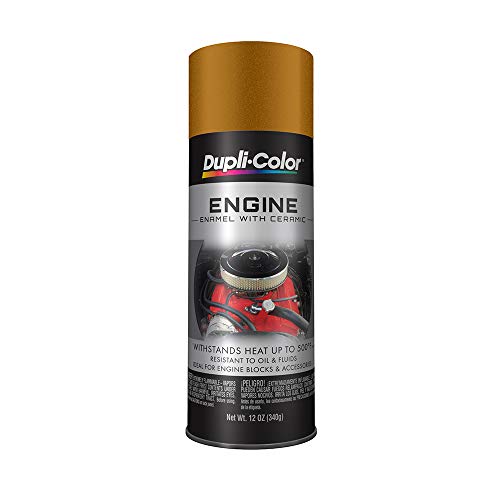
Best for: Projects where a bronze to gold engine finish is desired, such as show cars or components where aesthetics matter alongside heat resilience. This Universal Gold ceramic enamel also resists heat up to 500°F intermittently and offers durable protection against automotive fluids. The EZ Touch nozzle facilitates even coating on blocks and accessories, with drying times similar to the black variant.
Why selected: Combines high-temperature performance with a distinctive gold color, appealing to owners who want a standout yet protective engine finish. Caution: Visible gold shade can accent metal patina; for subtler looks, consider dark finishes above 500°F.
Eastwood 2K Aerospray High Temperature Ceramic Engine Gloss Black

Best for: Professional-grade projects where maximum durability is required. This 2K urethane-catalyzed technology yields a robust coating that remains durable under extreme conditions, with temperature resistance up to 650°F. Ideal for headers and exposed engine surfaces that see intense heat.
Why selected: The 2K system offers superior adhesion and chemical resistance, making it a better choice for heavy-use areas. Caution: Requires proper ventilation and mixing; ensure compatibility with your spray setup and safety practices.
Eastwood 2K Aerospray High Temperature Ceramic Engine Gloss Red

Best for: Drivers who want a bold red finish on engine components that still require high-heat performance. Like the black version, this uses 2K urethane-catalyzed technology and offers up to 650°F resistance, with a glossy red appearance.
Why selected: Red adds a distinctive aesthetic while maintaining engine protection under high heat. Caution: Color may fade slightly over time with exposure to heat cycles; consider touch-ups or alternative hues if longevity of color is critical.
VHT 550° Engine Enamel High Heat Spray Paint – GM Satin Black

Best for: Those needing a satin-black engine coating with reliable high-heat and chemical resistance. The blend of urethane and ceramic resins aims to withstand corrosion, rust, and common fuel additives, suitable for engine blocks, brackets, and other components.
Why selected: It balances heat resistance with a satin black finish that can blend well with many engine bays. Caution: Drying times can extend to overnight for full curing; plan for slower handling in some environments.
Buying Guide: Ceramic Paint For Exhaust and Engine Surfaces
- Heat tolerance matters. Choose products rated for temperatures matching or exceeding the area you intend to coat. 650°F coatings are typically best for headers and exhaust manifolds; 500°F-550°F options suit many engine blocks and brackets.
- Finish style vs. practicality. Gloss, semi-gloss, and satin finishes have different glare, cleaning, and patina characteristics. Bold colors like red or gold make parts stand out; black tones offer understated protection.
- 2K versus traditional enamel. 2K (urethane-catalyzed) systems generally provide stronger adhesion and chemical resistance, but require proper mixing and ventilation. Traditional enamel with ceramic resins is easier for beginners and still offers solid heat protection.
- Ease of use and application. Look for features such as EZ Touch nozzles for uniform coverage and fast-drying times if you’re working in tight spaces or in warmer climates.
- Surface preparation. Thoroughly clean, degrease, and lightly scuff metal surfaces. Removing oil and contaminants improves adhesion and prevents peeling or blistering under heat.
- Color longevity and maintenance. Higher heat areas experience more cycling between hot and cool. Expect some color shift or gloss reduction in extreme conditions; periodic touch-ups can extend the coating life.
- Safety and ventilation. Work in a well-ventilated area, wear a respirator, and follow product-specific safety instructions, particularly with 2K systems that involve reactive components.
FAQ
- Can I use ceramic engine paint on exhaust manifolds? Yes, many ceramic engine paints are designed for exhaust components, but verify the product’s temperature rating and compatibility with exhaust gas exposure.
- Do ceramic paints require primers? Some coatings are self-priming or designed to bond to bare metal; others may benefit from a high-heat primer for best adhesion. Always follow the manufacturer’s guidance.
- Will ceramic paint crack under heat cycles? Properly applied coatings with appropriate prep typically resist cracking, but extremely high continuous heat or improper curing can lead to issues. Choose a product rated for your specific application.
- How long does it take to cure? Many high-heat enamel coatings dry to touch within 30 minutes and cure fully overnight. Drying times vary by temperature and humidity; follow the label directions for best results.
- Is 2K paint safer to use than standard enamel? 2K paints offer superior durability and heat resistance but require proper mixing, ventilation, and safety precautions due to reactive isocyanates.
- Can I spray over an existing coating? If the current coating is intact and clean, you can typically apply over it after scuffing; flaking or peeling requires removing the old finish before repainting.