Direct answer: affordable 12V electric fuel pumps provide a simple solution for transferring gasoline and diesel in small engines, lawn equipment, and light-duty applications. This guide highlights five budget-friendly options that balance cost with dependable performance. It helps buyers choose pumps best suited for lawn mowers, small engines, ATVs, boats, and generators, and flags practical limitations to avoid common mismatches. A compact buying table is included for quick comparison.
Summary table of selected products (quick reference)
- Product: Universal Electric Fuel Pump Kit 12v 3-6 PSI — Best overall value for carburetor lawn mowers and small engines
- Product: Electric Fuel Pump 12V Universal Low Pressure 2.5-4psi — Best compact, lightweight option
- Product: Clatoon Universal Electric Fuel Transfer Pump 12V — Best for reliability in varied small-engine applications
- Product: Universal 12 Volt Electric Fuel Pump 5-9 PSI — Best for slightly higher pressure needs
- Product: Universal Electric Fuel Pump Kit 12V 3-6 PSI With Filter — Best ready-to-install kit with line and filter
Universal Electric Fuel Pump Kit 12v 3-6 PSI Low Pressure Replacement For Carburetor Lawn Mower Gas Diesel Fuel Transfer Pump
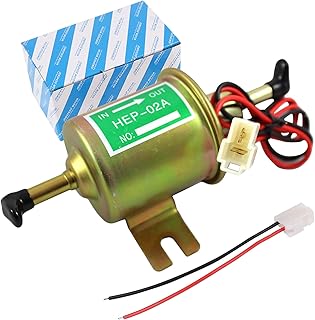
Best for: lawn equipment and small carbureted engines where a compact, ready-to-install kit is preferred.
Why chosen: A low-pressure, 3-6 PSI design fits carburetor systems and small transfer tasks without overpressurizing lines.
Limitations: Check compatibility with your engine’s intake fittings; some kits may require additional tubing or clamps not included in every listing.
Electric Fuel Pump 12V Universal Low Pressure 2.5-4psi — Compact Transfer Pump

Key details: 12V inline fuel pump with 2.5-4 psi output; 30 GPH flow; 8 mm hose size. Built-in check valve to prevent backflow; two-wire design for easy wiring.
Best for: users needing a lightweight, space-saving option for lawn mowers, small engines, ATVs, boats, or generators.
Why chosen: Lightweight, small size makes it versatile for tight installs and standby setups. It also supports booster roles in larger systems.
Limitations: Lower maximum pressure means not ideal for high-pressure fuel rail systems or engines requiring higher PSI.
Clatoon Universal Electric Fuel Transfer Pump 12V — 3-6 PSI

Details: Output pressure 3-6 PSI; 30 GPH flow; 12V operation; includes 2.64 inch installation hole distance and 0.32 inch tubing interface. Features a pure copper wire motor and built-in check valve.
Best for: small engines, lawn mowers, boats, and generators requiring steady, low-pressure transfer with long-term durability.
Why chosen: The copper motor and backflow protection support reliable operation under continuous use. Suitable for a variety of light-duty transfer tasks.
Limitations: Check for your specific hose size and mounting space; some installations may require adapters.
Universal 12 Volt Electric Fuel Pump 5-9 PSI, 35GPH

Best for: higher-flow transfer needs in small engines and generators where 5-9 PSI is appropriate.
Why chosen: Higher pressure helps push fuel through longer runs and small diesel/gasoline systems that need a stronger feed.
Limitations: Slightly higher price and energy use; ensure your fuel line tolerates the up to 9 PSI without leaks.
Universal Electric Fuel Pump Kit 12V 3-6 PSI With Filter

Best for: replacement carburetor setups and kits that require an integrated fuel filter for cleaner delivery.
Why chosen: Having a built-in filter helps protect carburetors from debris in budget installations.
Limitations: Some listings may not include all installation hardware; verify what contents are included before purchase.
Buying Guide
Key purchase considerations for cheap electric fuel pumps include compatibility, pressure range, flow rate, mounting options, and durability. The following questions help buyers compare options:
- What is my target PSI range for the application (2.5-4 PSI vs. 3-6 PSI vs. 5-9 PSI)?
- Do I need a built-in filter or an external filter in my fuel line?
- What is the required flow rate (GPH) for my engine and hose length?
- Is a backflow prevention feature important for my setup?
- What mounting space and electrical wiring are available in my vehicle or equipment?
How to choose: For lawn mowers and small carbureted engines, a 3-6 PSI pump with 30 GPH is typically sufficient and helps avoid over-pressurizing lines. For longer runs or generators, a higher-PSI option around 5-9 PSI can improve fuel delivery. If space is tight, a compact, lightweight pump often installs more easily, but verify connector sizes and tubing IDs (commonly 5/16 inch or 8 mm).
Installation and safety tips
- Follow the manufacturer’s wiring instructions; use a fuse and proper gauge wiring to prevent electrical issues.
- Install the pump inline and ensure correct flow direction to avoid backflow or pump damage.
- Use clamps on hoses to prevent leaks and slippage under vibration.
- Avoid placing the pump where it could be exposed to heat, moisture, or direct fuel leaks.
FAQ
- Q: Can I use a low-pressure pump for high-performance engines?
A: Not typically. High-performance engines may require higher PSI and more robust fuel systems. - Q: Do these pumps require a return line?
A: Most budget inline pumps do not require a return line, but consult your system design. - Q: Will these pumps work with diesel engines?
A: Some are labeled for gasoline or diesel; confirm compatibility with your fuel type. - Q: How do I know what PSI my system needs?
A: Check your carburetor or fuel rail specifications; match the pump’s PSI to the system requirements. - Q: Are these pumps suitable for marine use?
A: Some models advertise multi-application use (boats, generators); verify IP rating and corrosion resistance for marine environments.