If you’re facing coolant leaks in a diesel engine, you want a fast, reliable fix that works with minimal disruption. This guide highlights top stop-leak products that seal radiator, head gasket, and block leaks without extensive flushing. The best picks target both light-duty diesel pickups and heavier duty engines, helping prevent overheating and costly downtime. Below, you’ll find a concise buying table and five product profiles to help you choose the right solution for your engine’s needs.
| Product | Best For | Type | Notes |
|---|---|---|---|
| K-Seal ST5501 | Light to mid-range diesel engines | One-step, pour-and-go | Works with all antifreeze; no flushing required |
| K-Seal ST5516 | Heavy-duty or commercial diesel engines | One-step, pour-and-go | Suitable for large engines and heavy use |
| BlueDevil Radiator & Block Sealer | All cooling systems and multi-vehicle use | Non-clogging, 16 oz bottle | Permanent repair option when compatible |
| K Seal Multi Purpose 8 oz | Versatile, smaller repair needs | One-step, permanent | Compact bottle for quick top-offs |
| Bar’s Leaks Liquid Copper | Intake and radiator leaks in various diesels | One-step, liquid copper | Compatible with all cooling systems |
Important note: When using any stop-leak product, run the engine to normal operating temperature and follow the manufacturer’s instructions for mixing and application. These products are designed for temporary or semi-permanent sealing and should be monitored for leaks after treatment. They are best suited for vehicles with minor to moderate leaks and may not fix severe damage like cracked blocks in all cases.
K-Seal ST5501 Multi-Purpose One Step Coolant Leak Repair

Best for light to mid-range diesel engines needing a quick, one-step fix. This 8-ounce bottle is designed to seal leaks in radiators, head gaskets, freeze plugs, blocks, heater matrices, and water pumps within minutes. It works on most water-cooled engines and is compatible with all antifreeze. Choose this if you want a fast, general-purpose seal that doesn’t require flushing. A potential limitation is that very large leaks or severely damaged gaskets may require professional servicing.
K-Seal ST5516 Heavy-Duty One Step Leak Repair

Best for large diesel engines and commercial or agricultural vehicles. This 16-ounce solution targets heavy-duty cooling system leaks, sealing holes and cracks across radiators, head gaskets, blocks, and pumps. It’s formulated to handle high-heat operation typical in heavy use. Opt for this if you’re dealing with a larger engine or persistent leaks in a work vehicle. Caution: application yields best results when the system is clean and within normal operating temperatures; extremely large or multiple leaks may require additional steps.
BlueDevil Radiator & Block Sealer

Best for a comprehensive, multi-vehicle formula designed for all cooling systems. The 16-ounce bottle is marketed as a permanent repair with a non-clogging formula, suitable for diverse diesel setups. This option is well-suited for fleets or owners who want a single product that can address several types of leaks. Consider this if you need a long-lasting solution across different vehicles. Limitation: effectiveness depends on leak size and may not fix major structural damage in every case.
K Seal Multi Purpose One Step 8 oz

A practical choice for versatile, smaller-scale diesel applications requiring a one-step, permanent seal. The 8-ounce size provides convenient use for maintained diesel systems and is designed to mix with all antifreeze coolants. Best for owners who prefer a compact, durable option that can be applied quickly. Limitation: smaller bottle may require more frequent replacement for persistent leaks or larger engines.
Bar’s Leaks 1109 Liquid Copper Block Seal
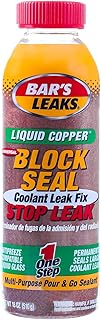
Best for intake and radiator leaks in diesel engines, using a copper-based formula to seal cracks in cooling passages. This one-step product is designed for use across various cooling systems. Choose this if you prefer a copper-based solution and are addressing leaks in areas where copper chemistry is compatible with your system. Caution: copper-based formulas may interact differently with certain seals or gaskets; always verify compatibility with your vehicle’s materials.
Buying Guide: Key Considerations for Diesel Engine Coolant Stop Leaks
What type of leak do you have? Identify whether the issue is a small seepage, a larger crack, or a suspected head gasket problem. For minor leaks, one-step, pour-and-go products are often sufficient and require no flushing. For more serious leaks, consider a heavy-duty formula designed for larger engines.
Engine size and application matter. Light- to mid-range diesels benefit from general-purpose sealers, while commercial and agricultural engines may require heavy-duty solutions with higher flow and durability. Always match the product to your engine’s size and use case.
Compatibility with coolant. Most products specify compatibility with all antifreeze types. Ensure the sealant will not react adversely with your specific coolant formulation. In fleets, standardizing on one compatible product can simplify maintenance.
System cleanliness and preparation. Flushing is often not required, but clean systems perform better. If there is sludge or debris, consider performing a coolant flush first, especially for larger leaks or persistent issues.
Monitoring and follow-up. After applying a sealer, monitor coolant levels and leaks. Many products provide a temporary seal; plan for a belt-and-suspenders approach, including a scheduled inspection and, if needed, professional evaluation for persistent leaks or overheating.
FAQ: Diesel Engine Coolant Stop Leaks
- Will this fix a blown head gasket? Stop-leak products can seal small head-gasket leaks in some cases, but they are not a guaranteed fix for a blown or severely damaged gasket. Persistent overheating or child symptoms should prompt professional inspection.
- Do these products require the engine to be running? Most stop-leak treatments are poured into a hot radiator or coolant reservoir with the engine running or after the engine reaches operating temperature as directed by the label. Follow the specific product instructions for best results.
- Can I use stop-leak with all antifreeze types? Many products are formulated to be compatible with all antifreeze types, but always verify compatibility on the product label before use.
- Is the repair permanent? Some formulas advertise permanent sealing, while others provide long-lasting seals but may still require monitoring and future maintenance. Read product claims carefully and assess based on leak size and engine condition.
- Will a stop-leak void my warranty? It can depend on the manufacturer and the vehicle. Some warranties may require approved service procedures. Check your vehicle’s warranty terms before applying a sealant.
- What if the leak returns after sealing? If leaks recur, or overheating happens again, discontinue use and consult a professional mechanic. Sealer treatments may not address underlying structural damage.