Finding the right digital signal processor (DSP) can significantly improve your car’s sound stage. This guide highlights top DSPs designed for in-car audio tuning, crossovers, EQ, and remote control options. We focus on devices with intuitive interfaces, multiple outputs, and robust preset options to suit various systems and listening preferences.
Below is a quick summary of five standout DSPs. The table helps compare core capabilities at a glance before you dive into detailed product sections.
| Product | Brand | Key Features |
|---|---|---|
| PRV AUDIO Car Audio DSP 2.4X | PRV AUDIO | 2 inputs, 4 outputs, 15-band EQ, multiple presets |
| PRV AUDIO Car Audio DSP 2.8X | PRV AUDIO | 2 inputs, 8 outputs, 15-band EQ, sequencer |
| Timpano TPT-SP4BT | Timpano | Bluetooth control, 4 outputs, built-in sequencer |
| Taramp’s DSP Pro 2.4S | Taramp’s | 15-band EQ, inputs A/B, 2 in / 4 out, sequencer |
| Dayton Audio DSP-408 | Dayton Audio | 4 input / 8 output, real-time GUI, built-in EQ & crossovers |
PRV AUDIO Car Audio DSP 2.4X

The PRV DSP 2.4x is a four-output digital crossover and equalizer designed for car audio systems that require flexible source selection and precise control. It supports two inputs (A and B) and allows A, B, or A+B sources for each output, enabling complex routing for multi-channel setups. The integrated 15-band graphic EQ supports manual tuning and comes with 12 presets including Flat, Bass Boost, and Hip Hop, making quick adjustments accessible on the go. Real-time adjustments are facilitated via an LCD display for on-vehicle tuning sessions.
PRV AUDIO Car Audio DSP 2.8X
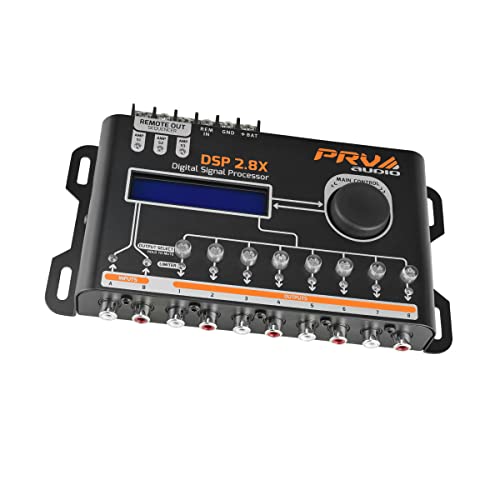
The PRV DSP 2.8x expands to eight independent outputs and maintains a similar intuitive interface and input options as the 2.4x. With two inputs and 8 channel outputs, it supports versatile routing for larger installations. It includes a 15-band graphic equalizer, with 12 presets and additional manual tuning. The device is suitable for vehicles needing more channels to drive separate amplifiers for front, rear, and subwoofers while keeping control through the same LCD interface.
Timpano TPT-SP4BT Bluetooth DSP

The compact TPT-SP4BT is a 4-output DSP that is Bluetooth-enabled, allowing wireless configuration from a smartphone or tablet. It provides a built-in remote voltmeter and remote relay options. The DSP features a sequencer for programming startup and shutdown of up to three connected devices via remote connections S1, S2, and S3, supporting convenient car audio system management. The Bluetooth interface enables tuning without physical access to the unit, making it ideal for DIY installs and mobile tuning sessions.
Taramp’s DSP Pro 2.4S

The Taramp’s DSP Pro 2.4S combines a 15-band graphic equalizer with 2 inputs and 4 outputs, enabling simultaneous processing of multiple source signals. Its built-in sequencer allows programmed control over startup and shutdown of connected devices. The device supports ISO-standard frequency definitions and offers a range of crossover options, including various slope filters, to tailor the sound across the vehicle’s listening zones. The DSP’s robust tuning capabilities are suited for a detailed, studio-like car audio experience.
Dayton Audio DSP-408

The Dayton Audio DSP-408 provides four inputs and eight outputs, designed for comprehensive real-time signal processing. It supports crossovers, time alignment, and an intuitive GUI for easy tuning. This DSP is positioned for both home and car audio applications, offering a balance of advanced features and user-friendly control. It is well-suited for enthusiasts who want precise, fully adjustable sound shaping without a steep learning curve.
Buying Guide
Key considerations when selecting a car audio DSP include channel count, input flexibility, and crossovers. A larger number of outputs helps drive multiple amplifiers and separate zones (front, rear, sub). Look for devices with two inputs or more if you plan to blend sources or use a high-level integration with a factory radio. A clear, accessible user interface—whether LCD-based or app-controlled—reduces tuning time and improves repeatability.
- Channel count and output planning: Decide how many channels you need (2×4, 4×8, etc.) based on your amplifier setup and the number of listening zones.
- Source options and sequencing: Consider models with A/B inputs, A+B mixing, and sequencers to automate start/stop of connected devices for convenience and reliability.
- Presets and EQ bands: Many DSPs offer 12–15 band EQ with preset modes. Evaluate if manual tuning is sufficient or if presets support your music style (rock, hip-hop, electronic).
- Remote control and Bluetooth: Bluetooth-enabled units allow tuning from a seat, but wired connections tend to be more reliable in loud environments.
- Interface and learning curve: An intuitive GUI or LCD interface speeds up setup. App-based tuning can be powerful but may require ongoing updates and compatibility checks.
- Build and compatibility: Check compatibility with your vehicle’s head unit, amplifier channels, and overall electrical system. Some DSPs include voltmeters or remote relays for better integration.
Across the options presented, you can choose based on the balance of channel count, ease of use, and tuning depth that matches your installation goals. For installers and enthusiasts who value sequenced control and advanced routing, units like the PRV AUDIO 2.8X, Taramp’s DSP Pro 2.4S, and the Timpano 4-output Bluetooth DSP stand out. If you want broad compatibility with a straightforward GUI, Dayton Audio DSP-408 is a strong all-around pick. For mobile tuning from a phone, Bluetooth-enabled models like the Timpano option offer practical convenience without sacrificing performance.