When towing a horse trailer, sway control is essential for stability, safety, and peace of mind. This guide highlights top sway bar and weight-distribution components that reduce trailer sway, improve steering feel, and help you manage highway winds or quick lane changes. Suitable buyers range from new trailer owners to seasoned haulers seeking reliable upgrade parts. Below, you’ll find five well-matched options, each explained with who it’s best for, plus a practical buying guide and frequently asked questions.
| Product | Best For | Key Benefit |
|---|---|---|
| CURT 17063 MV Round Bar Weight Distribution Hitch with Sway Control | Heavy loads, longer trips | Redirects tongue weight and reduces sway with included sway control kit |
| Lusheer Sway Control Bracket Kit for Equalizer Hitch Parts | Versatile replacement for multiple frame sizes | Complete sway-control mounting for 3″–6″ frames on 6k–14k hitches |
| CURT 17201 Trailer-Mounted Sway Control Ball | Simple, install-on-one-part solution | Attaches sway-control capability to trailer frame with bolts included |
| VEOVR Weight Distribution Hitch with Sway Control | Four-point sway control and ease of use | 4-point swivel control to limit lateral movement for a smoother ride |
| Shocker Clamp on Trailer Frame Mount Bracket Kit | Frame-mounted sway components on aluminum or thick frames | Clamp-on design avoids drilling; fits several frame heights |
CURT 17063 MV Round Bar Weight Distribution Hitch with Sway Control

Best for: Long trips with heavier loads, where tongue weight distribution is needed to stabilize the tow vehicle and trailer together. CURT 17063 redistributes tongue weight to improve control and reduces sway with a dedicated sway control kit (#17200). A grease zerk fitting helps maintain the mechanism for ongoing performance.
Why selected: This model combines weight-distribution with active sway control, which is advantageous when towing a heavier horse trailer on highways or in gusty winds. The integrated lubrication feature helps ensure longevity in variable conditions. Limitations include compatibility considerations with odd frame configurations.
Lusheer Sway Control Bracket Kit for Equalizer Hitch Parts
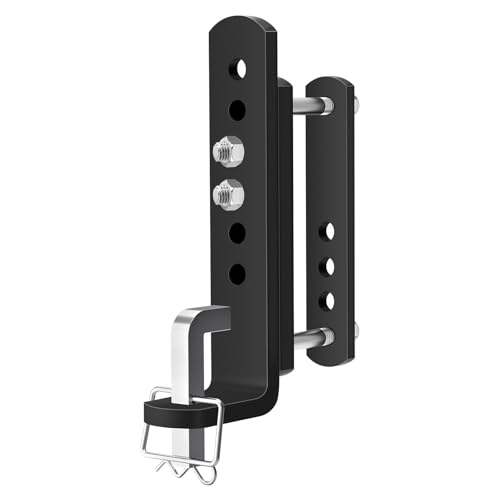
Best for: Replacing OEM parts on multiple frame sizes (3″ to 6″ frames) and updating a sway-control system on a 6,000–14,000 lb hitch. This complete kit is aimed at owners who want a versatile solution that fits a range of trailers, including horse trailers with varied frame dimensions.
Why selected: It offers broad compatibility and a solid mounting point for spring bars, helping to stabilize the tongue during high-speed operation or crosswinds. Caution: Verify your frame size before ordering to ensure a proper fit.
CURT 17201 Trailer-Mounted Sway Control Ball

Best for: Simple, direct attachment to enable sway control, suitable when you need a quick upgrade to a trailer’s sway capability. This ball mounts on the trailer frame to accept the sway-control component (#17200) for effective control.
Why selected: It’s a straightforward addition that improves sway handling without requiring a full hitch change. Limitation: It relies on compatible sway-control arms being used in conjunction with the correct mounting hardware.
Relioky 32334 Lift Tool Kit for Sway Bar Installation

Best for: Owners who need an assistive tool to install or remove sway bars on a weight-distribution system, especially when working with a center-line hitch. This kit includes a lever-based lift tool to help position bars safely.
Why selected: The tool simplifies handling for larger trailers and reduces the risk of misalignment during installation. Limitation: Compatibility is mainly with Husky and Reese systems, so confirm your hitch brand before purchase.
VEOVR Weight Distribution Hitch with Sway Control

Best for: Trailer owners seeking four-point sway control and a robust build for long hauls. The VEOVR hitch uses a four-point swivel arrangement to limit sway and provide a stable ride, distributing weight across vehicle and trailer axles for better handling.
Why selected: The four-point approach offers improved control compared to two-point systems, which is beneficial in crosswinds or quick lane changes. Limitation: Ensure your vehicle’s mounting options and frame compatibility align with this model’s specifications.
JIANBENKJ Trailer Hitch Sway Control Adapter

Best for: Class III and IV 2″ square ball mounts requiring a sway control adapter on both sides for enhanced stability. This two-sided adapter helps support a friction sway bar system on diverse trailer setups.
Why selected: Dual-side support increases compatibility and stability across more trailer configurations. Limitation: It is only compatible with certain 2″ square ball mounts and may require additional components for full sway control operation.
Shocker Clamp on Trailer Frame Mount Bracket Kit

Best for: Trailer frames where drilling is undesirable or impractical, including aluminum frames. This kit clamps onto the frame to mount a sway-control ball without modifying the trailer’s structure.
Why selected: It provides a drill-free mounting option and works on multiple frame heights (4″ to 8″ tall). Limitation: Clamp-on fit may not be suitable for all frame styles or thicker rails, so verify compatibility first.
Buying Guide: Key Considerations for Horse Trailer Sway Bars
When selecting a sway-control solution for a horse trailer, consider how the system interacts with your trailer’s weight distribution, frame size, and towing setup.
- Trailer weight and tongue weight: Heavier trailers benefit from weight-distribution hitch systems that actively counterbalance sway.
- Frame compatibility: Ensure the kit fits your frame size (3″–6″ frames common in horse trailers) and mounting style (bolted vs. clamp-on).
- Installation complexity: Some options require drilling or additional hardware; others offer tool-free or clamp-on installation.
- Number of sway-control points: Four-point systems generally provide more stability than two-point configurations, especially in crosswinds.
- Maintenance and lubrication: Look for grease fittings or lubrication points to minimize wear and maintain performance over time.
- Compatibility with existing components: If you already have a specific weight-distribution kit or equalizer system, verify compatibility with replacement brackets or sway-control balls.
- Durability and material quality: Hardened steel and corrosion-resistant coatings extend life in outdoor environments.
FAQ for Horse Trailer Sway Bar Upgrades
- What is sway control, and why is it important for horse trailers?
Sway control reduces trailer oscillation behind the towing vehicle, improving stability and steering responsiveness, which is especially important for transporting horses safely on highways.
- Do I need a weight-distribution hitch to reduce sway?
Not always, but weight-distribution hitch systems combined with sway control can significantly improve stability for heavier trailers by redistributing tongue weight and reducing sway potential.
- Can I install sway-control components myself?
Many options are designed for DIY installation, including bolt-on and clamp-on kits. Some installations may require professional help if frame compatibility is uncertain.
- How do I choose between a clamp-on and a bolted sway-control system?
Clamp-on systems are drill-free and simpler to install on compatible frames, while bolted systems may provide stronger, more permanent mounting on compatible frames.
- What maintenance steps help sway-control components last longer?
Regular lubrication at grease fittings, inspecting mounting bolts for tightness, and checking for wear on bars or brackets can maintain performance and safety.
- Are there any signs sway control is failing?
Increased trailer sway during wind gusts, a rough or noisy operation, or misalignment of bars and brackets are indicators to inspect the system.