Answering the question: which brake line adapters are best for master cylinder projects depends on your vehicle and setup. This guide highlights five adapters that cover common thread sizes, inverted flare needs, and compatibility with popular brands. These picks suit DIYers, professional mechanics, and shop managers looking for reliable, corrosion-resistant brass options, easy installation, and broad industrial applicability. Read on to identify the best fit for your brake line job, from universal adapters to kit-combo solutions.
| Product | Best For | Key Benefit |
|---|---|---|
| Dorman 785-445 (Universal Brass Adaptor) | Various brake line configurations | Corrosion-resistant brass; broad compatibility |
| Dorman 785-434D (Inverted Flare, 1/4″ x 3/16″) | Inverted flare needs | Compact, durable brass design |
| 4Pcs 785-434D Brass Set | Multiple vehicles with inverted flare | Secure connection kit |
| EBOOT Master Cylinder Bleeder Kit | Bleeding and adapters in one kit | Includes hoses, fittings, and PTFE tape |
| 50.7mm Master Cylinder Adapter (PESIKO) | Specific Hyundai/Mitsubishi/Nissan/ Subaru builds | Direct fit for selected models |
Dorman 785-445 Brake Line Adaptor-Tube 3/8-24 In. X 1/2-20 In. Universal Fit

Best for versatile brake line projects that require a universal fit. The brass design offers corrosion resistance for long service life and supports a broad range of industrial and commercial uses. This adapter suits vehicles or systems needing 3/8-24 to 1/2-20 connections and is compatible with a variety of line styles. Ideal for shops that prioritize a single, adaptable part for multiple makes.
Who it’s for: Automotive technicians and DIYers handling mixed-brand fleets or repair bays where a universal solution saves time. Best for: projects with uncertain or multiple flare configurations.
Caution: Verify thread compatibility before mixing among brands to avoid leakage or mismatch. Data notes emphasize broad suitability but do not guarantee fit for every model.
Dorman 785-434D Brake Adapter – Inverted Flare – 1/4 in. X 3/16 in.

This inverted-flare adapter targets smaller flare configurations common in domestic and imported lines. The brass construction resists corrosion and supports reliable, leak-free connections in tight spaces. Best for brake lines that require 1/4″ to 3/16″ inverted flare transitions.
Who it’s for: Technicians replacing or retrofitting lines on cars with inverted flare needs, including standard domestic and light-commercial vehicles. Why chosen: compact size and corrosion resistance improve installation reliability.
Limitation: Inverted flare fittings may require precise alignment; prepare to verify flare compatibility with your specific caliper or outlet style.
4Pcs 785-434D Brass Brake Adapter Set

This CNC-machined brass set provides secure connections for 1/4″ to 3/16″ inverted flare lines. The kit is designed to fit multiple vehicles and ABS modules with anti-leak performance. Best for: workshops requiring a reliable, interchangeable set for frequent brake line work.
Who it’s for: Shops or individuals who frequently service inverted flare brake lines across several makes. Why chosen: a ready-to-use set reduces repeat shopping trips and ensures consistent fitment. Caution: Confirm each vehicle’s flare size and thread pitch before mixing adapters.
EBOOT 20 Pcs Brake Master Cylinder Bleeder Kit
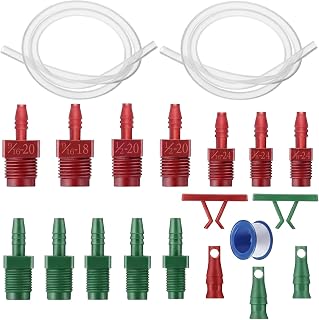
Bleed and service master cylinders with this all-in-one kit. It includes SAE/Metric adapters, two clear hoses, multiple threaded adapters, tees, clips, and PTFE tape for bench bleeding. Best for: shops or DIYers performing frequent bleeding and fluid changes across various vehicle makes. Why chosen: comprehensive kit reduces the number of separate purchases and streamlines the bleeding process.
Who it’s for: Technicians who need a broad adapter assortment and reliable bench-bleed capability. Caution: This kit includes many parts; ensure you have space to organize and store the components properly.
50.7mm Master Cylinder Adapter (PESIKO)

Specialized master cylinder adapter for select Hyundai, Mitsubishi, Nissan, Subaru models and some Chrysler, Dodge, Ford Lincoln configurations. The inner diameter is 50.7 mm with a 57 mm outer diameter, designed for easy installation without air leakage. Best for: Specific model fits where the installer knows the exact compatibility. Why chosen: direct-fit option that minimizes fitment guesswork when servicing these brands.
Who it’s for: Techs or enthusiasts working on compatible Hyundai, Nissan, Mitsubishi, or Subaru builds. Caution: Confirm exact model compatibility before purchasing to avoid mismatches.
Buying Guide: Master Cylinder Brake Line Adapters
Key considerations when choosing brake line adapters:
- Thread size and flare type: Confirm whether you need 1/4″ to 3/16″ inverted flare, or a universal 3/8-24 to 1/2-20 configuration. Flare type affects seal integrity and proper seating in the banjo or outlet.
- Material and durability: Brass adapters resist corrosion and are common in automotive brake systems. Consider stainless or brass options based on environment exposure and longevity needs.
- Vehicle compatibility: Some adapters are universal, while others target specific brands or models. Verify model-year fit and compatibility with ABS modules if relevant.
- Kit completeness: If bleeding and flushing are required, a kit with hoses, clamps, PTFE tape, and multiple adapters can reduce parts shopping time.
- Installation considerations: Some adapters require precise alignment or space constraints. Ensure room for wrench access and avoid interference with nearby components.
- Storage and organization: Kits with multiple pieces are useful for shops; use labeled storage to prevent mis-matching during future repairs.
Comparative guidance by need:
- Best for versatility: Universal brass adapters that cover many configurations and vehicles.
- Better for flare-specific work: Inverted flare adapters with precise 1/4″ to 3/16″ transitions.
- Choose this if you need a complete bleed and adapter solution: Bleeder kits with auxiliary fittings for bench bleeding.
- Avoid this if you require exact OEM fit only: Generic adapters may not align perfectly with every vehicle’s thread pattern.
Frequently Asked Questions
- What is a brake line adapter used for?
It connects different brake line thread sizes or flare types to ensure a leak-free seal between components. - How do I know which adapter fits my vehicle?
Check the flare type (inverted vs. standard), thread size, and the manufacturer’s compatibility list for your make and model. - Are brass brake adapters reliable?
Brass offers good corrosion resistance and is standard for many brake line fittings, contributing to durability in typical service conditions. - Should I use a full bleed kit or individual adapters?
A full bleed kit helps if you are performing bench bleeding or servicing multiple lines; individual adapters are sufficient for targeted repairs. - Can these adapters be used on ABS-equipped systems?
Some adapters are designed for general use and may be compatible with ABS modules, but always confirm fitment with your specific ABS setup. - Do I need professional help for brake line work?
If you are unsure about flare types, thread compatibility, or bleeding procedures, professional assistance is recommended.