When protecting a motorcycle, a GPS-enabled alarm provides real-time location updates, instant alerts, and remote safety controls. This guide highlights five top options, focusing on best fits for daily riders, weekend adventurers, and fleet owners. Each selection prioritizes reliable tracking, clear notifications, and practical installation. The buyer will find a quick comparison table below to help decide which model matches their needs, whether for solo commuting, sport biking, or multi-vehicle security.
| Product | Best For | ||
|---|---|---|---|
| Monimoto 9 US Version | Most riders wanting wireless, battery-friendly tracking | Real-time call alerts, worldwide tracking | Requires subscription after trial |
| Wsdcam 113dB Bike Alarm | Budget-conscious riders needing strong audible alert | Vibration sensor, adjustable sensitivity | IP55 water resistance |
| TOP-MAX Car/Motorcycle Tracker | DIY installers wanting remote power control | Remote oil/power cut, GPS + LBS | Requires SIM card setup |
| LNKERCO 2-Way Alarm With Remote | Users who want remote status at a distance | Two-way LCD remote with engine kill | 12V system compatibility |
| SALIND 4G Wired GPS Tracker | Fleet or multi-vehicle setups needing hardwired reliability | Hardwired power, in-app geofence | Subscription needed |
Monimoto 9 US Version Anti-Theft GPS Tracker

The Monimoto 9 US version is a wireless, rechargeable GPS tracker designed to protect motorcycles, cars, boats, and ATVs without drawing from the battery. It’s ideal for riders who want a discreet device that’s easy to hide and uses a built-in e-SIM for global location updates. Best for riders who value simple setup and real-time call alerts over SMS notifications, especially when you need immediate awareness of suspicious movement. A two-month complimentary data trial is provided, with an annual data fee thereafter.
Who it’s best for and why
- Best for riders who prefer a wireless, battery-friendly solution that’s hard to detect and quick to alert via a phone call.
- Better for riders covering long travel or international trips due to global GPS tracking and an included e-SIM.
Considerations
Limitations include the need for ongoing data service after the trial period. The device is best installed out of sight to maximize deterrence.
Wsdcam 113dB Bike Alarm With Remote
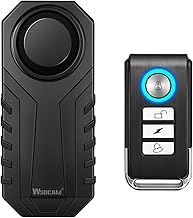
This wireless alarm includes a vibration sensor with adjustable levels for sensitivity and volume. It’s well-suited for bikes, motorcycles, scooters, and electric bikes where you want a strong audible deterrent and a remote control. The IP55 rating makes it weather-resistant for everyday riding, though not submersible. It’s a strong choice for riders who prioritize loud alarms and straightforward remote operation.
Who it’s best for and why
- Best for riders who want a loud, configurable warning without complex setup.
- Choose this if you ride in areas where audible deterrence significantly reduces theft attempts.
Considerations
Waterproofing is sufficient for rain and splashes but not for submersion. Range is solid for typical parking scenarios but not ideal for very long distances.
GPS Tracker With Remote Kill for Motorcycles

This tracker’s standout feature is the option to remotely cut off the oil or power to the vehicle, paired with GPS+LBS location updates. It supports a broad vehicle range and can alert the owner via SMS or internet monitoring. It is best for riders who want an active deterrent and the ability to respond to tampering even without GSM coverage.
Who it’s best for and why
- Best for riders who want direct remote control over engine power as a theft-prevention method.
- Better for those who value dual-location reporting (GPS + LBS) for robust positioning.
Considerations
Users must manage SIM card setup and understand subscription requirements to access ongoing location data.
LNKERCO 2-Way Alarm With Engine Kill

This system integrates a dual-layer sensor setup and a 115dB siren with an engine kill switch. The 2-way LCD remote provides clear status updates and remote control from up to 1000 meters. It’s designed for 12V motorcycles and is especially useful for riders who want a high level of control and immediate feedback on security status.
Who it’s best for and why
- Best for riders who need real-time remote status and a physical anti-theft measure (engine kill).
- Choose this if you prefer a dedicated LCD remote to monitor and actuate protection without pulling out a phone.
Considerations
Designed for 12V systems; ensure compatibility with your bike’s electrical layout before installation.
SALIND 4G Wired GPS Tracker for Motorbike

The SALIND 4G wired tracker is built for continuous vehicle monitoring with a pre-installed SIM and a direct connection to a 9–75V vehicle battery. Its compact design enables discreet installation, and it supports geofence alerts and in-app monitoring. This makes it well-suited for fleets or owners who want a robust, hard-wired tracking solution with ongoing data access via subscription.
Who it’s best for and why
- Best for fleet managers or multi-vehicle owners who require a hardwired, continuously powered tracker.
- Better for those who want reliable, constant location updates and geofence management.
Considerations
Because it’s wired and requires a subscription, installation is more permanent and ongoing costs apply beyond the initial hardware.
Buying Guide: Key Considerations For Choosing A Motorcycle GPS Alarm
- Security vs. convenience: Do you want a discreet, wireless tracker or a feature-rich system with remote engine kill?
- Power source: Wireless trackers save battery but may need more frequent checks; wired units offer constant power but require more invasive installation.
- Alerts and notifications: Prefer phone calls, SMS, or app alerts? Consider devices that offer multiple channels for timely responses.
- Geofencing and location accuracy: Look for devices with precise GPS/LBS support and configurable geofence zones for safer parking areas.
- Subscription cost: Most GPS alarms rely on a data plan. Evaluate trial periods, ongoing fees, and what happens if service lapses.
- Environmental durability: IP ratings and weather resistance matter for outdoor exposure; ensure the device suits your climate and riding habits.
- Installation complexity: DIY-friendly units suit riders who want quick setup; more integrated systems may require professional installation.
Practical tips
- Hide trackers in inconspicuous locations to reduce tampering risks.
- Test real-time alert reliability in different environments and distances from your phone.
- Regularly verify power supply (for wired systems) and battery health (for wireless units).
Frequently Asked Questions
- Do GPS motorcycle alarms require a data plan? Yes, most rely on cellular data to report location and status, often with a trial period.
- Can I use these devices on any motorcycle? Most are designed for 12V systems, but always check compatibility with your bike’s electrical setup.
- Is a loud alarm enough to deter theft? Alarms deter, but combining an audible alert with location tracking and engine control increases deterrence.
- What’s the difference between wired and wireless trackers? Wireless trackers are easier to install and less battery drain; wired trackers offer constant power and stealth but require wiring.
- Are two-way remotes useful? Yes, they provide quick status feedback without needing a phone, especially at long range.
- Do these devices work worldwide? Some models include global tracking via embedded SIMs, but verify regional support and roaming terms.