When choosing a motorcycle engine case sealant, you want a product that delivers a reliable, oil-resistant seal and withstands high temperatures and engine flex. This guide highlights five top sealants that are well-suited for motorcycle engines, from classic gasket makers to silicone-based solutions. It’s ideal for riders and DIY enthusiasts who want durable, fast-curing seals without removing the engine. The table below compares the chosen products at a glance.
| Product | Best For | Key Benefit |
|---|---|---|
| Permatex 29132 MotoSeal 1 Ultimate Gasket Maker Grey | Versatile gasket making | High-flex, grey color for gasket alignment |
| Permatex 82180 Ultra Black Maximum Oil Resistance RTV | Oil-heavy applications | Sensor-safe, non-corrosive, high oil resistance |
| Victor Reinz 70-31414-10 Reinzosil RTV Silicone | Professional-grade sealant | Premium RTV silicone for tight seals |
| Permatex 38401 Motoseal 2 & 4-Cycle Gasket Maker | Two- and four-stroke engines | Fast seal in 20 minutes, gasoline-resistant |
| Yamaha Yamabond 4 Silicone-Based Liquid Gasket | OEM-grade sealing | High-temperature resistance, oil-resistant |
Permatex MotoSeal 1 Ultimate Gasket Maker Grey

Product overview: Permatex MotoSeal 1 is a versatile gasket maker suitable for motorcycle engine cases. It forms a flexible, durable seal that tolerates engine movement and thermal cycling. The grey formula helps with alignment and visibility during assembly. Best for riders who want a single, reliable gasket maker that can handle both small and larger case seals without needing a separate gasket.
Who this is best for: DIY enthusiasts performing routine maintenance or gasket repairs on motorcycles that require a flexible, general-purpose sealant. Why selected: It provides good elasticity, quick cure, and compatibility with typical engine oils, reducing the chance of leaks around case joints.
Caution: This product may require careful surface prep and adequate cure time to maximize seal integrity in high-load conditions.
Permatex Ultra Black Maximum Oil Resistance RTV
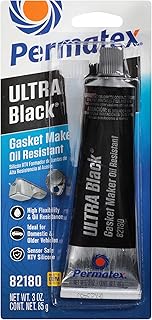
Product overview: Ultra Black is designed for oil-heavy environments and high viscosity demands. It offers sensor safety and non-corrosion properties, making it suitable for engine oil seals and gaskets in motorcycles with demanding oil systems. The 3-ounce tube is convenient for mid-size jobs.
Who this is best for: Riders dealing with oil seals and high-flex joints where resistance to oil and chemicals matters most. Why selected: Its superior oil resistance helps prevent seepage in crankcase areas exposed to engine oil pressure and heat.
Limitation: This product is formulated for oil resistance but may require careful application to prevent squeeze-out in tight clearance areas.
Victor Reinz Reinzosil RTV Silicone

Product overview: Reinzosil is a professional-grade RTV silicone designed for precision engine sealing. It forms a durable, oil-resistant bond that tolerates temperature fluctuations and engine movement, making it a robust option for gasket applications in motorcycles.
Who this is best for: Professional mechanics or demanding home mechanics seeking a dependable, long-lasting seal. Why selected: Its reputation for consistent curing and strong adhesion to metal surfaces makes it favorable for complex engine case seals.
Caution: As with all RTV silicones, ensure the surfaces are properly cleaned and degreased for optimal adhesion.
Permatex Motoseal 2 & 4-Cycle Gasket Maker

Product overview: Motoseal 2 and 4-Cycle is designed for both two- and four-stroke engines. It is gasoline-resistant and seals within about 20 minutes, reducing downtime during repairs. This makes it suitable for quick gasket repairs on multiple engine types.
Who this is best for: Riders performing mixed-cycle engine maintenance or those seeking a fast-curing option for both two- and four-stroke engines. Why selected: Quick setting and broad compatibility support efficient maintenance workflows.
Caution: Fast cure times can require precise alignment; non-flat mating surfaces may result in weaker seals if not properly prepared.
Yamaha Yamabond 4 Silicone-Based Liquid Gasket

Product overview: Yamabond 4 is an OEM silicone-based liquid gasket designed for Yamaha engines but widely used elsewhere due to its high-temperature resistance and oil exposure tolerance. The 2.5-ounce tube fits OEM-grade sealing needs when you want a gasket that integrates well with engine design consideration.
Who this is best for: Motorcycle owners seeking OEM-grade sealing with reliable heat and oil resistance. Why selected: The silicone formulation provides durable seals that can endure engine oil exposure and elevated temperatures common in motorcycle engines.
Caution: As an OEM-specific product, ensure compatibility with your engine model before use, and follow Yamaha’s recommended cure timing for best results.
Buying Guide
What kind of sealant do you need for motorcycle engine cases?
Choose a sealant based on the engine type, oil exposure, and temperature range. Gasket makers are versatile and can replace gaskets in many cases, while RTV silicones excel in high-temperature and oil-heavy environments. Consider whether you need a quick-curing formula or a longer-lasting bond for complex joints.
How important is oil resistance?
For engine cases that see constant oil exposure, select a product with maximum oil resistance. Products described as “Oil Resistance” or “Gasoline-Resistant” are designed to prevent leaks in demanding conditions.
What about curing time and application?
Fast-curing formulas save downtime but may require precise alignment. Slower-curing variants offer more working time for difficult seals. Always prep mating surfaces thoroughly and follow cure-time guidelines to ensure reliable sealing.
Is OEM-grade better than aftermarket?
OEM-grade sealants often align with engine design expectations. However, reputable aftermarket products can perform equally well if they are designed for high-temperature and oil-resistance expectations. Match the product to your engine’s requirements and confirm compatibility with your motorcycle model.
How should I apply sealant for case seals?
Apply an even bead along the joint, avoid excessive thickness, and seat components with proper torque. Cleanliness matters: degrease surfaces, remove old sealant, and ensure no debris remains in the seal interface.
Maintenance tips after sealing
After installation, inspect for leaks during initial runs. If seepage appears, recheck the mating surfaces and cure times. Use an appropriate torque pattern and consider re-sealing if the joint is subjected to repeated stress or unusual heat cycling.
Frequently asked questions
- What is the best sealant for motorcycle engine cases?
- Can I use any RTV silicone on an engine?
- How long does it take for gasket makers to cure?
- Do sealants affect engine oil compatibility?
- When should I replace a gasket with a new one?
- Are OEM sealants worth the extra cost?
Answer: The best sealant depends on your engine, oil exposure, and curing needs. RTV silicone and gasket makers both have suitable applications; follow surface prep and cure guidance for optimal sealing. OEM-grade products offer trusted compatibility, while reputable aftermarket options provide strong performance in many cases.