Answering the needs of DIY enthusiasts, fleet managers, and professional technicians, these OBD II data logger options provide reliable ways to monitor vehicle health, log CAN data, and diagnose issues. The top picks cover consumer-grade Bluetooth scanners, specialized diagnostic bundles, and robust CAN bus recorders for fleet use. Choose based on compatibility, data logging depth, and whether you need mobile app support or standalone hardware.
| Product | Best For | Key Benefit |
|---|---|---|
| OBDLink MX+ OBD2 Bluetooth Scanner | General diagnostics and app-driven analysis | Mobile-friendly with broad app compatibility |
| Hinson HPT Bundle (MPVI4) | Advanced diagnostics and coding | Professional-grade capabilities |
| PT30 Device with OBD-II Cable | ELD and fleet tracking | Truck-focused fleet management |
| Veepeak OBDCheck BLE | Affordable generic OBD-II checks | Simple, app-based diagnostics |
| CANedge1: 2 x CAN Bus Data Logger | Standalone CAN data logging | Heavy data logging for CAN networks |
OBDLink MX+ OBD2 Bluetooth Scanner for iPhone, Android, and Windows

The OBDLink MX+ is a versatile Bluetooth scanner that turns mobile devices or a Windows PC into a diagnostic tool. It supports iPhone, Android, and Windows platforms, making it suitable for mixed-device setups. Best for individual mechanics, hobbyists, and small shops that want wireless, fast access to diagnostic data. The device is noted for enhanced OEM support across multiple brands, improving compatibility with Ford, GM, Toyota, Honda, Hyundai, and others. Use this if you prefer a flexible, app-driven workflow and broad compatibility.
Caution: Some advanced features rely on third-party apps; verify specific functions before purchase. The MX+ is not a standalone data logger; it excels when paired with compatible apps for data capture and analysis.
Hinson HPT Bundle of MPVI4 Diagnostic Code Reader and Hinson Credit Notice
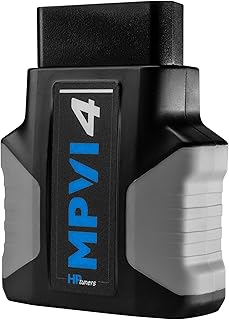
The HPT Bundle targets advanced diagnostics and vehicle programming with MPVI4 technology. It’s best for experienced technicians or outfitters who need robust coding capabilities beyond standard OBD-II reads. This option is suited for performance tuning, custom adaptations, and more in-depth vehicle data capture. It’s less about casual scanning and more about expansive diagnostic workflows.
Limitations: It may require specialized knowledge to maximize its features and is typically used within professional settings rather than casual, on-the-go checkups.
PT30 Device with OBD-II Cable (16pin) for ELD and Fleet Tracking

This PT30 device is built for trucking fleets and owner-operators seeking an ELD and fleet management solution. It integrates OBD-II data capture with electronic logging and GPS for fleet tracking. Best for commercial drivers who need compliant logging combined with route and asset management. Choose this if you require a dedicated fleet data recorder with ELD functionality.
Limitation: While strong for fleet use, it may have a steeper setup and learning curve compared to consumer OBD scanners intended for basic diagnostics.
Veepeak OBDCheck BLE Bluetooth OBD II Scanner

The Veepeak OBDCheck BLE is a budget-friendly, Bluetooth 4.0/5.0 scanner designed for iOS and Android. It relies on third-party apps for full functionality and is best for quick checks, live sensor data, and code reading/clearing for standard OBD-II vehicles. Best for casual users or as a backup tool in a shop. It is not a stand-alone logger; functionality depends on the chosen app.
Note: App compatibility varies, and some advanced OBD-II functions may be unavailable without a compatible app.
CANedge1: 2 x CAN Bus Data Logger
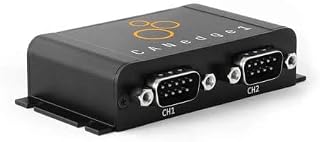
The CANedge1 is a standalone data logger designed to capture CAN bus data, including CANopen and J1939, with a 32 GB SD card. It’s best for engineers and researchers who need long-duration, high-volume CAN data capture in test benches or on-vehicle experiments. Choose this for deep CAN network logging and post-processing analysis. It does not rely on a connected mobile device, which is useful for field data collection.
Limitation: It requires data interpretation and software to extract insights from logged CAN data; it’s not a plug-and-play diagnostic tool for casual users.
Buying Guide: Key Purchase Considerations
- Device purpose: Determine whether you need casual diagnostics, fleet ELD, advanced coding, or standalone CAN data logging. This guides choosing between consumer scanners, professional bundles, or standalone loggers.
- Compatibility: Check which platforms you will use (iOS, Android, Windows) and ensure the device supports your preferred apps or software for data capture and interpretation.
- Data depth: Consider how much data you need to log. Standalone CAN data loggers like CANedge1 provide extensive data, while basic OBD-II scanners emphasize code reads and live sensor data.
- Ease of use: If quick results are essential, prioritize devices with clear app support and straightforward interpretation. For fleets, ease of deployment and centralized data access matter more.
- Expandability: Some systems offer broader OEM support, additional apps, or firmware updates. This matters for future-proofing and compatibility with newer vehicles.
- Limitations: Be aware that some devices depend on third-party apps for core features, and certain advanced diagnostics may require specific software subscriptions or licenses.
Product Comparison Snapshot
- Best for mobile-first readers: OBDLink MX+ (strong app ecosystem and cross-platform support).
- Best for advanced coding: Hinson HPT Bundle (professional-grade capabilities).
- Best for fleet ELD: PT30 Device with OBD-II Cable (built for trucking fleets).
- Best budget OBD-II checks: Veepeak OBDCheck BLE (affordable, app-dependent).
- Best for standalone data logging: CANedge1 (independent CAN bus data recorder).
Frequently Asked Questions
- What is an OBD II data logger used for?
– It records live vehicle data from the OBD II port or CAN bus for diagnostics, performance analysis, and fleet monitoring. - Do I need a specific app to use these devices?
– Some devices rely on third-party apps; check compatibility and required apps before purchasing. - Can these devices work with both gasoline and diesel vehicles?
– Generally yes for OBD II-compatible vehicles; however, certain features may vary by vehicle and app. - Is standalone CAN bus logging easier than using an OBD II scanner?
– Standalone loggers capture more data over longer periods and are suited for in-depth CAN analysis, while OBD II scanners focus on immediate diagnostics. - Do these devices require firmware updates?
– Some models offer firmware updates to improve compatibility and features; verify update availability before buying.