If you’re outfitting a boat with a reliable onboard charging system, these marine battery chargers are designed to keep batteries ready for action. The best picks here suit different setups: two-bank systems for small to mid-size boats, four-bank options for larger rigs, and lithium-ready chargers for modern power systems. This guide helps you choose by battery type, bank count, waterproofing, and smart charging features. A quick comparison table follows to summarize core specs for quick decisions.
| Product | Bank Count | Battery Type | Waterproof Rating | Best For |
|---|---|---|---|---|
| Guest 2707A Guest On-Board Battery Charger | 2 | Lead-Acid | IP67 | Two batteries in tighter spaces |
| ProMariner 44012 ProSport HD | 2 | Lead-Acid | Waterproof | Rugged marine performance |
| FirstPower Pro 10X1 | 1 | Lead-Acid & Lithium | IP68 | Small, versatile 1-bank option |
| LiTime IP65 14.6V 10A | 1 | LiFePO4 / Li-based | IP65 | Lithium-ready, outdoor use |
| KAISAL 4-Bank 12V 40A | 4 | Lead-Acid & LiFePO4 | IP67 | Four batteries, larger systems |
Guest 2707A On-Board Battery Charger

The Guest 2707A is a dual-bank charger that independently charges two batteries, making it a strong choice for compact boats with limited space. It is IP67 waterproof, designed to withstand marine conditions, and includes safety features such as reverse polarity, over-current, over-voltage, over-temperature protection, plus ignition protection. Best for small to mid-size boats that require dependable dual-bank charging in harsh environments.
Who it’s best for: boat owners needing a compact, rugged dual-bank charger for two batteries, with strong moisture resistance. Why chosen: its independent bank charging and Marine-grade protection help maintain battery health during long trips or marina storage. Caution: installation must ensure proper venting and wiring to maximize safety features.
ProMariner 44012 ProSport HD 12 Amp 2 Bank

The ProMariner ProSport HD 44012 is a 12A dual-bank charger built for reliability and fast charging. It uses digital tech and distributed-on-demand charging to allocate available amps across batteries as needed. This makes it a solid pick for boats with two batteries requiring balanced, fast charging. Best for: boats with two long-duration batteries where rapid, precise charging matters. Better for: sailors and anglers who need consistent performance in variable loads. Limitation: older Gen 3 ProSport models may have legacy compatibility concerns with certain systems.
FirstPower Pro 10X1 10A/Bank Onboard Charger
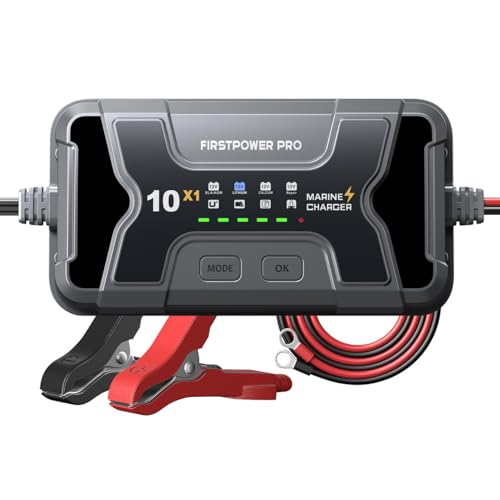
The 10X1 is a single-bank, 10A onboard charger compatible with SLA, AGM, calcium, and lithium batteries. It features IP68 waterproofing and a 3-mode smart charging system (SLA/AGM, Lithium, Calcium) with a dedicated “Force Mode” to wake dead batteries. Best for: boat setups needing a compact, lithium-capable option. Choose this if you have one battery and want flexible charging modes. Caution: only one battery is supported per unit, so you’ll need multiple units for multi-battery systems.
LiTime IP65 14.6V LiFePO4 Onboard Charger
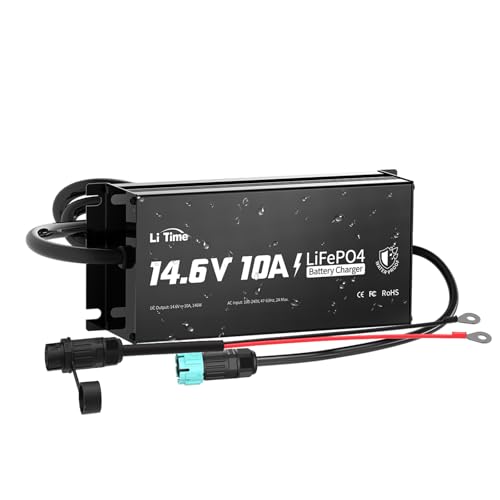
The LiTime 14.6V LiFePO4 onboard charger delivers 10A of charging for LiFePO4 batteries and features multi-stage charging with CC/CV regulation. IP65-rated protection and a robust build suit outdoor marine use. Best for: lithium-based power systems and mixed marine applications where battery longevity matters. Limitation: primarily optimized for LiFePO4; verify compatibility with older lead-acid setups if used as a mixed system.
KAISAL 4-Bank 12V 40A Marine Charger

The KAISAL 4-Bank charger provides four independent channels at 10A each, totaling 40A. It supports multiple battery types (LiFePO4, NCM lithium, and lead-acid) and uses intelligent charging with CC, CV, and float modes. Best for: boats with several batteries or larger energy storage needs. Better for: users who want simultaneous charging across multiple banks. Limitation: higher power draw means more complex installation and power management to avoid tripping circuits.
QC3.0 Dual USB 12V Marine Socket With Touch Switch

The Qidoe USB outlet provides two QC 3.0 USB ports with a touch switch and blue LED. While not a charger for batteries, it complements onboard charging by powering devices efficiently during charging sessions. Best for: boaters who want fast USB charging for accessories while their batteries charge. Caution: does not charge batteries itself; requires a separate battery charger for energy storage.
Buying Guide: Key Considerations For Onboard Marine Chargers
- Bank configuration: Determine how many batteries you need to charge simultaneously. Two-bank models suit many smaller boats; four-bank units work well for larger rigs with multiple batteries.
- Battery chemistry compatibility: Ensure the charger supports your battery types (lead-acid, AGM, LiFePO4, calcium, or mixed systems). Lithium-ready options prevent premature failure and extend battery life.
- Waterproofing and environmental protection: Look for IP67 or IP68 for saltwater exposure and engine compartments. IP65 is common for outdoor or exposed locations.
- Smart charging features: Multi-stage charging, adjustable modes, and wake/force modes help optimize charge cycles and recover deeply discharged batteries.
- Safety protections: Over-current, over-voltage, reverse polarity, over-temperature, and ignition protection reduce risk in marine environments.
- Installation and wiring: Check that the charger’s voltage and current ratings align with your boat’s electrical system and that you have space for proper ventilation and cable management.
- Lithium vs lead-acid readiness: If upgrading to LiFePO4, prioritize chargers with dedicated LiFePO4 charging profiles and proper termination voltages to maintain battery health.
Frequently Asked Questions
- What is the difference between a 2-bank and a 4-bank charger? Answer: Bank count indicates how many individual batteries can be charged independently at the same time. More banks support larger battery banks or multiple battery types without mixing charging cycles.
- Can I use a marine charger for both lithium and lead-acid batteries? Answer: Yes, but choose models with multi-mode or LiFePO4-specific profiles to optimize charging for each chemistry.
- Is IP67 water resistance enough for a marine environment? Answer: IP67 provides excellent protection against immersion, dust, and moisture in many marine scenarios, but consider location and exposure when mounting.
- Should I wake a deeply discharged battery before charging? Answer: Some chargers offer a wake or force mode to begin charging below 1V, which can help revive a dead battery. Use only if the charger supports this feature and follow manufacturer guidance.
- Do onboard chargers require professional installation? Answer: For safety and performance, it’s often best to have a marine electrician install high-current chargers and verify proper fuse sizing, wiring, and ventilation.
- Will a charger automatically switch between battery banks? Answer: Many models distribute unused charging amps across banks as needed. This helps maintain multiple batteries without manual intervention.