For RV owners seeking reliable, portable accessibility, these ramps offer safer entry and exit from motorhomes, trailers, and camping setups. Each option fits different heights, weights, and storage needs, making it easier to choose for a first-time buyer or a seasoned traveler. This guide highlights five top picks, who they’re best for, and practical reasons to choose or avoid each option.
Overview of top products at a glance:
| Product | Best For | Key Benefit |
|---|---|---|
| VNN Portable Wheelchair Ramp 6FT | Home steps and doorways | Non-slip aluminum with seamless surface |
| MAASTERS Wheelchair Ramp 12 Feet | Long ramps for higher steps | ADA compliant, foldable with extra support legs |
| FACHNUO 8FT Portable Ramp | Medium ramps with high capacity | 800 lbs, reinforced safety features |
| 2FT Portable Ramp for Home Steps | Low rise thresholds | Compact, 800 lbs capacity, quick storage |
| VNN Portable Wheelchair Ramp 4FT | Shorter, stable access | Non-slip surface, lightweight handling |
VNN Portable Wheelchair Ramp 6FT – Non-Slip Aluminum

The 6-foot VNN ramp is designed for doorways and home steps, offering seamless aluminum construction and a non-slip surface. It’s best for RV owners needing a mid-length ramp to bridge moderate step heights. The ramp is described as suitable for handicap and wheelchair use, with a focus on stability during entry and exit. A potential limitation is longer storage length when not in use, which is common across longer portable ramps.
Who it’s best for: RV travelers with mid-height step access, and those prioritizing a smooth, continuous ramp surface for wheeled mobility devices. Why chosen: balanced length, non-slip surface, and straightforward deployment make it a practical match for frequent RV trips.
Limitation to note: storage space may be a consideration for smaller RVs or compact garages.
MAASTERS Wheelchair Ramp 12 Feet

The 12-foot ramp from MAASTERS is designed for extended runs with a high load capacity, up to 600 lbs, and portability through folding design and extra support legs. This option is well-suited for RV setups that require longer crossing lengths to adapt to uneven ground or elevated ramps at camp sites. The ADA-compliant feature supports standard accessibility expectations, making it a robust choice for frequent campers and RV enthusiasts.
Who it’s best for: RV owners needing a longer ramp to accommodate higher steps or uneven terrain around campsites. Why chosen: long length reduces steep angles, improving wheel stability and safety. Caution: longer ramps can be heavier and require more storage space.
Limitation to note: heavier build and potential bulk may reduce ease of single-person handling in tight RV storage areas.
FACHNUO 8FT Portable Wheelchair Ramp – 800LBS
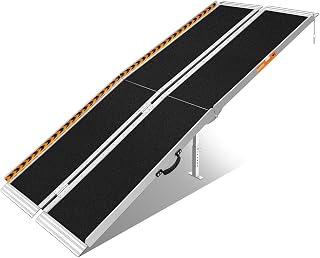
FACHNUO offers an 8-foot ramp with a high weight capacity (800 lbs) and reinforced safety measures. Includes support legs for stability and a sturdy non-slip surface designed to handle wheelchairs and electric chairs. The product emphasizes safety features like reflective strips and extended rails to reduce missteps, especially in low-light camping scenarios. A note: buyers should consult the size guide to ensure proper fit for their steps and slope requirements.
Who it’s best for: RV users needing a dependable, higher-capacity ramp with strong stability features. Why chosen: solid load rating, built-in safety elements, and no-setup design. Caution: ensure the ramp matches your exact step height for safe use.
2FT Portable Wheelchair Ramp – 800 LBS

This 2-foot ramp is designed for low-rise thresholds, with a broad 28.3-inch width and an 800-pound capacity. It includes a folding design and carry handle, making it convenient for RV storage and quick deployment on camp sites. Designed to handle steps in the 2–6 inch range, it’s better suited for entry doors or small risers rather than steep ramps.
Who it’s best for: RV users needing a compact, lightweight option for small steps or threshold access. Why chosen: compact size and carry handle aid portability. Caution: use only within the recommended rise to maintain a safe incline.
VNN Portable Wheelchair Ramp 4FT – Non-Slip
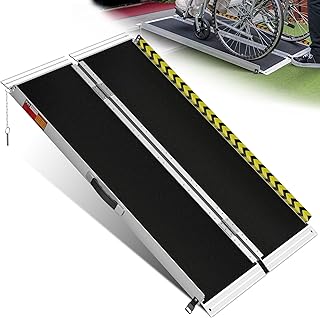
The 4-foot version provides a shorter option with a non-slip surface and double non-skid protection. It is described as suitable for 4–12 inch step heights and includes features to prevent slips and missteps in dim conditions. The ramp can be fixed to a wooden platform using complimentary screws, adding versatility for uneven RV entries.
Who it’s best for: RV users needing a shorter, stable ramp for lower steps or thresholds. Why chosen: reliable non-slip surface and fix-on capability for added stability. Caution: ensure your step height stays within the recommended range to avoid steep angles.
Buying Guide: Portable Ramp Essentials For RVs
What ramp length do I need for my RV entry?
Ramp length should create a gentle slope. A longer ramp reduces the incline but requires more storage space. For typical RV doorways, lengths from 4 to 12 feet cover a range of step heights and ground irregularities.
How much weight capacity should I look for?
Choose a ramp with a capacity that exceeds the heaviest potential load, including the user and wheelchair or scooter. Common capacities range from 600 to 800 pounds, offering a safety margin for most mobility devices.
What safety features matter most?
Non-slip surfaces, anti-slip edges, reflective or high-visibility markings, and side rails or earmarked rails help prevent falls. Look for reinforced joints and secure hinges for durability on uneven camping surfaces.
Is portability important?
Consider ramp weight, folded size, and handles. Lighter ramps are easier to store in an RV’s tight spaces but may trade off weight capacity or rigidity. Folding designs balance storage with strength.
Are installation considerations important?
Some ramps are designed to rest on flat ground, while others can be fixed to a platform or doorway. If you expect frequent setup at camp sites with wooden or composite decks, check compatibility with mounting options and hardware included or recommended.
How should I measure my steps and thresholds?
Measure total rise (vertical height) and run (horizontal projection). A longer run gives a gentler slope. Always compare measurements to the ramp’s size guide to avoid unsafe angles or insufficient clearance.
Portability vs. stability trade-offs
Longer ramps provide gentler slopes but require more space and heavier handling. Shorter ramps are easier to carry but may demand steeper angles. Choose based on how often you travel, your vehicle’s storage capacity, and the most common step heights you encounter on campsites.
Weather and durability considerations
Ramps used outdoors should resist rust and corrosion. Aluminum ramps are common for outdoor use due to light weight and resistance to moisture. Look for ramps with protective coatings and clear weight ratings to ensure longevity in variable climates.
Frequently Asked Questions
- What is the best ramp length for RV entryways? – A length between 6 and 12 feet is typically suitable for moderate to tall steps, providing a safer incline and better wheel stability.
- Can I use a residential ramp inside an RV bay? – Yes, if the ramp matches the rise and length requirements and fits within your storage area without obstructing passage.
- Do ramps require installation hardware? – Some ramps are freestanding, while others offer mounting options. Check the product details for hardware compatibility.
- What weight capacity is safe for wheelchairs on ramps? – Choose a ramp with at least 800 pounds capacity for most power and manual chairs, plus user weight.
- Are non-slip features sufficient for outdoor use? – Non-slip surfaces plus reflective strips improve safety, especially in damp or low-light conditions.
- How do I know if a ramp fits my step height? – Refer to the manufacturer’s size guide and measure your rise to ensure the ramp’s stated height range matches your steps.