When you need portable, gas-powered propulsion for a canoe or kayak, these compact outboard motors offer reliable thrust, easy starts, and simple mounting. This guide highlights five options that balance power, weight, and fuel efficiency. Ideal buyers include casual paddlers needing occasional motor assist, weekend explorers seeking faster water travel, and light-duty boaters who prioritize quick refueling and simple operation. Below is a quick reference table of the top picks and who they suit best.
| Product | Best For | Key Benefit |
|---|---|---|
| PERFERATE 2.3HP Outboard | Kayaks And Canoes | Fast start, lightweight |
| 49CC 3.5HP Outboard | Small Boats, Short Trips | Low fuel use, quiet operation |
| Hangkai 3.5HP Short Shaft | Compact Rigs | Strong thrust, easy handling |
| 52CC 2.5HP Short Shaft | Casual Day Trips | Clear fuel view, adjustable throttle |
| 2.3HP 52CC Outboard | Inflatables And Small Boats | Efficient cooling, quick mounting |
PERFERATE 2.3HP 52CC Outboard For Kayaks And Canoes

The 2.3HP two-stroke motor delivers up to 8500 RPM. It supports 40-70 minutes of continuous operation on a full tank and uses a 0.22-gallon external fuel tank for quick refueling. CDI ignition paired with a recoil starter ensures rapid starts. Best for paddlers needing a compact, quick-to-mount engine on kayaks or canoes; easier for light-duty, short trips where speed is helpful. Caution: external tank must be refueled carefully to avoid spills.
49CC 3.5HP Outboard Engine With CDI
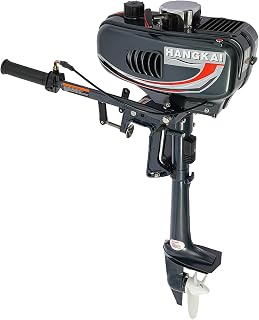
This 2-stroke 49cc engine provides about 3.5 HP at 5000 RPM with a 6.7″ three-blade propeller, designed for strong thrust. It features lightweight aluminum construction with corrosion resistance and a user-friendly throttle with stepless speed control and a clutch. The engine is suitable for small boats and inflatable craft, offering better fuel efficiency, with a small external 0.29-gallon fuel tank for longer trips. Best for: small boats that require reliable speed with moderate fuel economy. Limitation: higher noise and maintenance needs typical of 2-stroke designs.
Hangkai 3.5HP Short Shaft Outboard

This Hangkai 3.5HP motor reaches up to 5000 RPM with a 6.7″ three-blade propeller for stronger propulsion. It uses a lightweight aluminum alloy construction and a CDI ignition system for quick starts, with water cooling to help prolong parts life. Best for: small boats needing reliable speed and moderate salt/fresh water use. Choose this if you want a compact, fast setup; avoid if you require extended continuous operation beyond typical small craft trips, as fuel capacity is limited.
2.5 HP 52CC Short Shaft Outboard Motor

The 2-stroke 2.5HP engine offers up to 8500 RPM with a 0.26-gallon external fuel tank visible for easy fuel management. It uses electronic ignition for quick starts and features an adjustable handle for rotary and reverse functions. Best for: paddlers needing quick refueling and straightforward operation on short trips. Better for: users who prioritize visible fuel and simple throttle control. Limitation: smaller tanks mean more frequent refueling on longer voyages.
2.3HP 52CC Gas Powered Marine Engine
This 2-stroke 2.3HP motor reaches up to 8500 RPM and runs 40-70 minutes on a full oil-filled tank. It features quick heat dissipation through cooling holes and an air-cooling mechanism to prevent overheating. The rubber handle and mounting bracket provide secure, comfortable use on inflatable boats, kayaks, or canoes. Best for: anglers and casual paddlers who want a compact, reliable engine with simple mounting. Caution: ensure proper air flow to avoid overheating in hot conditions.
Buying Guide
What should you consider when choosing a small gas outboard for a canoe or kayak?
- Power needs: For calm, slow rivers, 2.3 to 3.5 HP is usually enough; for faster travel or heavier payloads, lean toward the 3.5 HP class.
- Weight and mounting: Short shaft models are often best for canoes and kayaks; verify mounting brackets fit your hull.
- Fuel capacity and efficiency: Look for external fuel tanks for easy top-ups and consider engines with efficient carburetors for longer trips.
- Cooling system: Air cooling is common in small motors; ensure adequate venting for hot days and extended use.
- Ignition system: CDI ignition enables quick starts; electronic ignition is generally more reliable than manual priming.
- Maintenance: 2-stroke engines are typically simpler but require oil mix; check local service options and availability of spare parts.
Addressing Common Buyer Scenarios
Choose this if you want the lightest setup for a kayak, prioritize quick starts, and do not plan long, continuous runs. Opt for a motor with larger fuel capacity if you expect long trips away from refueling points. Consider a model with better corrosion resistance if you paddle in salt water or brackish conditions.
Quick Comparison By Feature
- Best for weight: PERFERATE 2.3HP and 2.5HP Short Shaft options.
- Best for endurance: Models with larger external fuel tanks (0.29–0.26 gal variants).
- Best for ease of use: CDI ignition and recoil start on multiple models.
FAQ
- What size outboard is best for a canoe? A 2.3–3.5 HP engine is typically sufficient for most canoes and small kayaks.
- Do these engines require mixing oil with gasoline? Many are 2-stroke engines and require oil mixed with fuel unless otherwise specified by the manufacturer.
- Is air cooling enough for hot climates? Yes, most small outboards use air cooling; ensure unobstructed cooling vents during operation.
- Can I mount these on inflatable boats? Yes, several models are designed for inflatable boats and small rigid hulls with compatible mounting brackets.
- How long can I run these engines at full power? Most can run 40–70 minutes at full throttle on a full tank, depending on model and fuel mix.
- Are these engines suitable for saltwater? Many models use corrosion-resistant aluminum alloys; verify compatibility with saltwater use and rinse after use.