Answering the call for a compact, versatile propane generator, these models suit campers, RV owners, and light home backup alike. The best picks balance fuel flexibility, quiet operation, and practical features like CO sensors and RV-ready outlets. This guide highlights five units that perform well with propane, notes who each is best for, and flags any limitations to consider for your setup.
Summary of selected products
| Product | Best For | Key Benefit | Limitations |
|---|---|---|---|
| Westinghouse 4650 Peak | RV enthusiasts and hazard-aware users | Dual fuel with multiple outlets and CO sensor | More complex setup for beginners |
| WEN 2800-Watt DF280iX | Portable, quiet needs with CO monitoring | Clean power for electronics, affordable | Lower wattage than others |
| PowerSmart 4400W Dual Fuel Inverter | Camping and light home backup | Inverter tech, 30A RV ready, CO sensor | Limited run-time on propane at high loads |
| WEN 4,750-Watt DF475T | Powerful portable option | Wheel kit and electric start | Higher price and weight |
| PowerSmart 3800 Watt Inverter | Ultra-quiet, long runtime outdoor use | Low sound, long propane run | Lower peak wattage |
Westinghouse 4650 Peak Dual Fuel Generator

Product highlights show both gasoline and propane capabilities with a 4-gallon fuel tank, a run-time indicator, and multiple outlets: a 5-20R 120V duplex, a TT-30R 30A RV outlet, and an L5-30R 30A receptacle. This model includes essential safety features like rubber outlet covers and a CO sensor. Best for campers and RV users who want flexibility between fuel sources and a robust outlet setup. Caution: heavier than some portable units, which can impact mobility.
WEN 2800-Watt Dual Fuel Inverter Generator DF280iX

Best for users prioritizing light weight and quiet operation with clean power for electronics. It runs on gasoline (2800 surge / 2250 rated watts) or propane (2800 surge / 2000 rated watts) and includes the WEN CO Shutdown Sensor for automatic safety if CO levels rise. Ideal for small electronics, camping, and tailgate setups. Better for lighter loads; avoid this if you need high-wattage performance for power tools or appliances simultaneously.
PowerSmart 4400W Dual Fuel Inverter Generator

This model combines 4400 watts peak with a 223cc engine, offering 30A RV-ready capacity and a CO sensor for safety. It supports parallel operation and EPA-compliant performance with quiet operation at Eco mode. Best for users who need a solid balance of power and portability for camping or small home backup. Note: runtime can vary with load, and higher loads reduce runtime on propane.
WEN 4,750-Watt DF475T Dual Fuel Portable Generator

Best for those needing higher output from a portable unit with convenient features like wheel kit and electric start. Supports both gas and propane and is sized for heavier loads while remaining transportable. Best for weekend projects, home backup for essential circuits, or outdoor events where higher wattage is beneficial. Limitation: heavier and may require a more secure setup for transport and storage.
PowerSmart 3800 Watt Inverter Generator
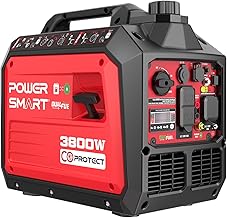
Best for quiet outdoor use with longer propane runtime. It delivers 3800 starting watts and 3300 running watts on gasoline, and 3500 starting watts and 3100 running watts on propane. It touts a low noise profile (Eco Mode) and parallel-ready design for scalable power. Choose this when you need a balance of quiet operation, efficiency, and reliability for camping or light home backup. Caution: peak output remains lower than some larger units, which may affect simultaneous high-demand loads.
Buying Guide: Key Considerations for Small Propane Generators
- Fuel flexibility: Dual-fuel models expand supply options but may be heavier and more complex to operate.
- Power needs: Determine essential appliances and tools to estimate starting and running watts. Inverter models deliver cleaner power for electronics but may have lower peak wattage.
- RV readiness: If you plan to power RV appliances, look for TT-30R or L5-30R outlets and a dedicated RV connection.
- Safety: CO sensors, automatic shutoff, and proper venting are critical for indoor or semi-enclosed use.
- Runtime and fuel tank: Larger tanks extend run times; propane offers longer shelf life but may reduce run time at high loads.
- Portability: Weight, wheel kits, and handle design influence ease of moving the generator to a desired location.
- Noise level: Inverter generators tend to be quieter; consider Eco/Quiet modes for neighbor-friendly operation.
- Parallel capability: If you anticipate needing more power, ensure the model supports parallel operation with compatible units.
Frequently Asked Questions
- What is the difference between peak watts and running watts?
Peak watts indicate the maximum surge power the unit can handle briefly, while running watts reflect continuous power output. - Is propane as reliable as gasoline in portable generators?
Propane is clean-burning and easy to store, but availability and pressure can affect runtime under heavy loads. - Why choose an inverter generator?
Inverter models provide cleaner power with lower total harmonic distortion, which is safer for sensitive electronics. - Do I need a CO sensor on my generator?
Yes, CO sensors offer important protection by automatically shutting off the generator if dangerous CO levels are detected. - What maintenance is required for dual-fuel generators?
Regular oil changes, air filter checks, spark plug inspection, and fuel system maintenance are recommended per the manual. - Can I run these generators indoors?
No. Use outdoors in a well-ventilated area to avoid carbon monoxide buildup.