Finding the right synthetic engine oil depends on your vehicle’s needs, mileage, and climate. This guide highlights five high-quality synthetic or synthetic-blend options from well-known brands, with clear, practical reasons to choose each. It targets buyers seeking longevity, reduced wear, and cleaner engines. The top picks cover high-mileage engines, European performance, and heavy-duty protection, helping you match oil type to your car’s requirements. A quick comparison table follows to aid quick decisions.
Choose according to your vehicle’s mileage, manufacturer recommendations, and driving conditions. The table below summarizes the five products to consider for synthetic or synthetic-blend oils.
| Product | Best For | Key Benefit | Limitations |
|---|---|---|---|
| Valvoline MaxLife High Mileage 5W-30 Synthetic Blend | Vehicles with 75,000+ miles | Seal conditioners, reduced leaks, better wear protection | Blend may be less pure synthetic than full synthetic options |
| Valvoline High Mileage with MaxLife Technology 5W-20 | High-mileage everyday drivers | 40% better wear protection, reduces leaks and sludge | 5W-20 viscosity may not suit all engines |
| Mobil 1 European Car Formula Full Synthetic 0W-40 | European-engineered vehicles or severe conditions | Long engine life, excellent viscosity retention | Typically premium price tier |
| Castrol EDGE High Mileage 5W-30 Advanced Full Synthetic | High-mileage engines needing long-change intervals | Extends life of emission systems, reduced leaks | 5W-30 may not fit all regional specs |
| Valvoline MaxLife High Mileage Full Synthetic 5W-20 | Vehicles with significant mileage left to run | Maximized engine life, stronger wear protection | 5W-20 viscosity may limit use in very hot climates |
Valvoline MaxLife High Mileage 5W-30 Synthetic Blend Motor Oil
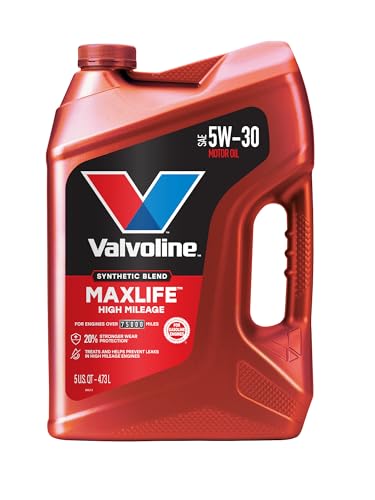
Best For: High-mileage engines with 75,000 miles or more. This synthetic blend includes seal conditioners to help prevent leaks and reduce oil consumption. It offers superior wear protection and sludge defense compared to standard industry baselines, supporting long-term engine cleanliness. Choose this if your vehicle is a high-mileage daily driver needing dependable protection against leaks and deposits. A caution: blend formulations may not deliver the pure synthetic performance some engines require.
Valvoline High Mileage with MaxLife Technology SAE 5W-20
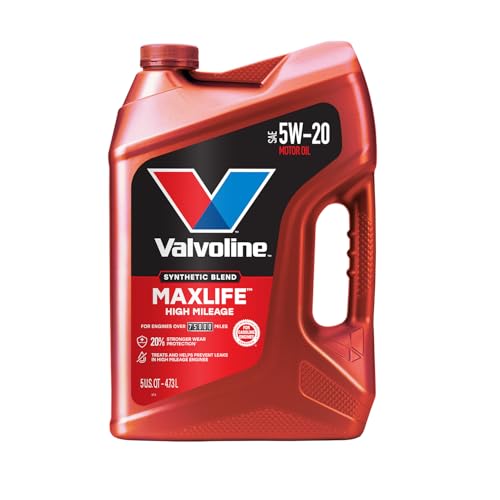
Best For: High-mileage engines needing robust protection and fuel economy maintenance. It features MaxLife Technology to provide stronger wear protection and includes seal conditioners to reduce oil leaks. Added detergents help keep sludge, rust, and deposits in check, promoting smoother operation. Limitation: 5W-20 viscosity may not suit every engine or climate; check manufacturer specs.
Mobil 1 European Car Formula Full Synthetic 0W-40

Best For: European-engineered vehicles and severe driving conditions. This full synthetic 0W-40 oil aims to extend engine life by resisting oxidation and maintaining viscosity for longer intervals. It supports reliable protection against wear and deposits under demanding driving. Caution: This option may be over-specified for non-European engines or where a different viscosity is recommended by the manufacturer.
Castrol EDGE High Mileage 5W-30 Advanced Full Synthetic

Best For: High-mileage engines needing deposits and leaks defense. It features Phosphorus Replacement Technology to protect emission systems and reduces leaks and deposits while supporting longer intervals. Choose this if you want an oil that aims to protect both engine and exhaust-related components. Limitation: 5W-30 viscosity should align with your vehicle’s spec and regional climate.
Castrol EDGE 0W-20/5W-30 Advanced Full Synthetic

Best For: High-performance engines seeking strong wear protection and extended change intervals. The product line includes versions with very demanding performance claims, such as higher mileage or tougher operating conditions. Better for engines requiring longer protection, but verify your exact viscosity and spec before purchase. A caution: not all Castrol EDGE variants fit every vehicle’s required performance spec.
Buying Guide: Key Considerations for Synthetic Car Engine Oils
What viscosity should I choose? Viscosity like 0W-40, 0W-20, or 5W-30 matters for cold starts and hot running protection. Always follow the manufacturer’s recommended viscosity and quality grade for your engine and climate.
Full synthetic vs synthetic blend: Full synthetic oils typically offer the best protection and smooth running in extreme conditions and high-performance engines. Synthetic blends can be a compromise between cost and performance, especially for high-mileage engines.
High mileage considerations: Engines over 75,000 miles often benefit from seal conditioners and stronger wear protection to prevent leaks and oil consumption. Look for products marketed as high-mileage or MaxLife series for these engines.
Detergency and deposit control: Oils with advanced detergents help prevent sludge and varnish buildup, supporting cleaner engines and longer life in engines with extended intervals or challenging driving conditions.
Emission-system compatibility: Some oils incorporate technologies to support emissions systems. If your vehicle has a catalytic converter or particulate filters, consider oils with phosphorus replacement tech or similar features as applicable to your engine design.
Change intervals: Although synthetic oils enable longer intervals in many cases, always adhere to the manufacturer’s recommended oil change schedule based on your driving conditions and climate. If you frequently drive in extreme heat, cold, or heavy towing, more frequent changes may be beneficial.
FAQ
Q: Do high-mileage oils require a different viscosity? A: Yes. Many high-mileage formulas use 5W-20 or 5W-30 to balance fuel economy and protection, but always follow your engine’s spec.
Q: Is a full synthetic better than a synthetic blend for long-term durability? A: Generally, full synthetic offers better protection and stability under extreme conditions, but synthetic blends can provide good protection at a lower cost, especially for high-mileage engines.
Q: Can I switch between brands? A: Switching brands is usually fine when following the recommended viscosity and API/ILSAC specifications. Some engines may respond better to certain formulations—verify compatibility with your vehicle’s manual.
Q: How often should I change oil with synthetic formulas? A: Follow manufacturer guidelines, but many full synthetic oils allow longer intervals between changes, especially in well-maintained engines and moderate driving conditions. Check your vehicle’s service manual for the recommended interval.
Q: Are high-mileage oils worth the extra cost? A: For aging engines with leaks or consumption, high-mileage formulations can reduce oil loss and deposits, potentially extending engine life. Consider your engine condition and maintenance history when deciding.