Hydraulic winches are trusted for reliability, endurance, and consistent performance in demanding recovery tasks. This guide highlights five top options, focusing on pulling power, motor efficiency, and durability in harsh conditions. Learn how hydraulic systems compare to electric models and what to look for when selecting a winch for wreckers, trailers, and rescue vehicles.
| Product | Rated Capacity | Gear Ratio | ||
|---|---|---|---|---|
| CXRCY Hydraulic Winch 1/2″x78FT | 20,000 lbs | 36:1 | BMR100 | 1/2″ rope |
| tekstap 20000LBS Hydraulic Winch | 20,000 lbs | 36:1 | BMR100 | 1/2″ rope |
| tekstap 15000LBS Hydraulic Winch | 15,000 lbs | 36:1 | BMR80 | 1/2″ rope |
| CXRCY Hydraulic Winch 2/5″x78FT | 15,000 lbs | 36:1 | BMR80 | 2/5″ rope |
| Hydraulic Winch 15000LBS | 15,000 lbs | 36:1 | BMR80 | 2/5″ rope |
The following sections present five selected models with concise overviews, core features, and application notes to help buyers compare performance and suitability for their fleets.
CXRCY Hydraulic Winch 20,000 lbs with 1/2″ Rope

The CXRCY hydraulic winch uses a robust BMR100 motor and a 36:1 gear ratio for strong, controlled pulling. It features a 1/2″ x 78 ft steel cable and a 4.3 ft hydraulic line. Its hydraulic design provides high power transfer, durability in harsh environments, and quiet operation, making it suitable for wreckers, trailers, and vehicle recovery tasks up to 20,000 lbs.
tekstap 20,000LBS Hydraulic Winch, 1/2IN Cable
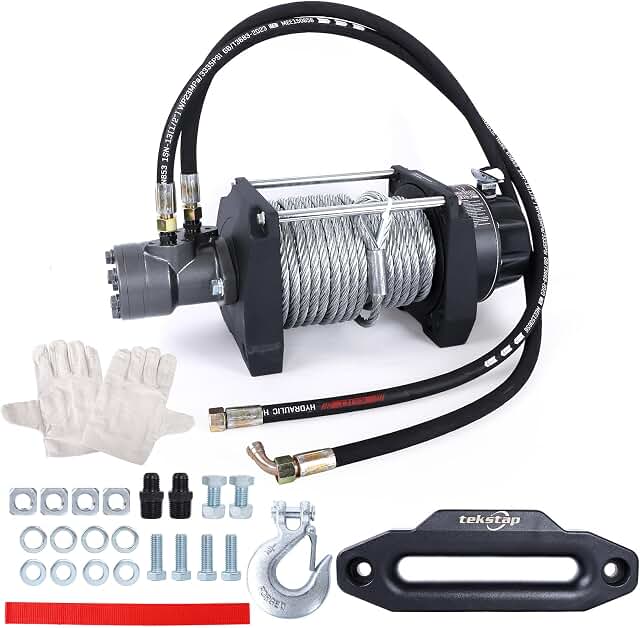
This winch combines a 20,000 lbs rating with a 36:1 gear ratio and a BMR100 hydraulic motor for heavy-duty tasks. It is designed for demanding off-road rescues, industrial towing, and vehicle recovery in challenging environments. The fully waterproof build helps it perform reliably in rain, mud, and moisture, with a 2-stage planetary gear system to deliver stable torque.
tekstap 15,000LBS Hydraulic Winch, 1/2″ Cable

Offering 15,000 lbs of pulling power with a 36:1 gearing and a BMR80 motor, this winch emphasizes low-speed, high-torque operation for controlled pulling. Its waterproof design supports use in wet conditions, and its robust construction supports off-road rescues, trailer towing, and industrial lifting tasks with reliable performance across temperature ranges.
CXRCY Hydraulic Winch 2/5″ Cable, 15,000 LBS

This model uses a 36:1 gear ratio and a BMR80 hydraulic motor to deliver robust torque for up to 15,000 lbs of pulling power. It features a 2/5″ steel rope and a 4.9 ft hydraulic line. The winch is designed for high-durability use in wreckers and rescue applications, with a focus on dependable performance in tough environments.
Hydraulic Winch 15,000LBS with 2/5″ Rope

Designed for heavy-duty needs, this 15,000 lbs winch utilizes a BMR80 motor and a 36:1 gear ratio. Its 2/5″ steel rope supports significant pull forces while maintaining compact dimensions. The unit is engineered for rugged service, including off-road recovery, rescue operations, and industrial towing, with stable torque delivery across varying loads.
Buying Guide
When selecting a tow truck hydraulic winch, consider the following factors to ensure the best fit for your fleet and jobs.
- Pulling capacity: Choose a winch rated above the maximum load you expect to recover. Higher ratings provide reserve capacity for unpredictable loads.
- Hydraulic motor and gear ratio: A larger motor (like BMR100) with a 36:1 gear ratio provides strong torque and controlled operation, ideal for heavy tasks. Lower ratio or smaller motors reduce torque and control for lighter duties.
- Rope size and material: Steel cables offer high strength, but require maintenance to prevent corrosion. Ensure rope length matches recovery needs and consider synthetic options if weight matters.
- Durability and weather resistance: Fully waterproof construction and sealed housings extend life in rain, mud, and freezing temperatures.
- Maintenance requirements: Hydraulic winches generally demand less frequent service than some electric models, but regular inspection of hoses, fittings, and the drum is essential.
- Ease of installation: Compare mounting patterns, power connections, and compatibility with your vehicle or trailer chassis.
- Portability and access: Longer cables and heavier drums may affect mounting location and vehicle weight balance. Account for safe operation clearances.
- Noise and vibration: Hydraulic systems typically operate quieter with smoother torque delivery, reducing operator fatigue.
- Warranty and support: Look for reputable brands that offer robust warranties and responsive customer service for parts and service.
- Application fit: Align the winch’s rated capacity and line speed with your typical recovery scenarios—off-road towing, urban rescues, or industrial lifting.
These considerations help buyers compare models across brands, ensuring selection aligns with operational demands, climate, and maintenance practices.