If your trailer hitch feels loose, a reliable anti-rattle solution can restore stability and reduce wear on your vehicle and equipment. This guide highlights five top hitch stabilizers and adapters designed to combat play in 1.25″ to 2″ receivers. Each option is explained with who it’s best for, why it was selected, and a practical caveat. A quick buying table at the start helps compare core details at a glance.
| Product | Best For | Key Benefit |
|---|---|---|
| DEEAGLE Hitch Tightener Anti Rattle Stabilizer | Trailers, campers, and small to mid-size pulls | Universal fit; reduces movement across multiple hitch classes |
| TOPTOW ATV/UTV Trailer Hitch Towing Ball Mounts | ATV/UTV users and yard work setups | 3-in-1 functionality for fast coupling |
| Ohuhu Bolt-on RV Bumper Hitch Receiver Adapter | RVs and bumper-style installations | Bolt-on convenience with added protection |
| Adjustable Trailer Hitch – 8in Drop Hitch | Heavy-duty trailers needing precise leveling | 8-inch rise/drop; slot-fit with triple noise reduction |
| Kohree 6″ Adjustable Trailer Hitch | Heavy towing with anti-rattle needs | Anti-rattle clamp; GTW 22,000 LBS |
DEEAGLE Hitch Tightener Anti Rattle Stabilizer

The DEEAGLE hitch tightener provides a robust 0.28″ plate with powder coating and rubber-coated U-bolts. It aims to absorb shocks and reduce rattle across 1.25″ and 2″ receivers, making it suitable for cars, trailers, RVs, and cargo carriers. Best for: users seeking a universal fix that minimizes movement and prolongs hitch life. Limitation: rubber coating and bolts may require inspection after heavy exposure to harsh weather and rough terrain.
TOPTOW ATV/UTV Trailer Hitch Towing Ball Mounts

This 3-in-1 hitch supports a standard 2″ receiver and adds versatility with a 2″ welded tow ball, a 1/2″ clevis pin, and a 3/4″ pin hole. It’s best for ATV/UTV owners who need one adapter for yard work, trailers, and yard equipment. Better for: quick switching between different tow configurations. Caution: designed for 2″ receivers; confirm your receiver size before purchase.
Ohuhu Bolt-on RV Bumper Hitch Receiver Adapter
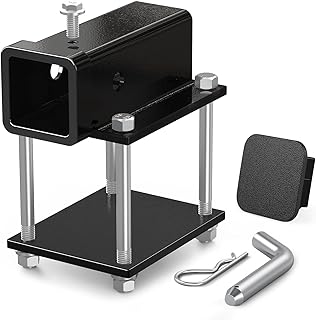
This adapter fits a 2″ receiver on bumpers with a 4-4.5″ beam, and it comes with a hitch pin and cover. Best for: RV owners or cargo setups using bumper-mounted receivers who want a straightforward bolt-on solution. Limitations: compatibility is beam-specific; verify beam width and mounting structure before buying.
Adjustable Trailer Hitch – 8in Drop Hitch (2.5 In Receiver)

This adjustable hitch is designed for 2.5″ receivers and features an 8-inch rise/drop with a triple-noise-reduction system, including multiple pads and side bolts. Best for: trailers and RVs that require precise leveling and reduced sway in a heavy-duty setup. Choose this if you need substantial vertical adjustment; avoid if you don’t have a 2.5″ receiver.
Kohree Adjustable Trailer Hitch

The Kohree 6″ Adjustable Trailer Hitch uses an anti-rattle clamp with a robust 22,000 LBS GTW rating and both 2″ and 2-5/16″ balls. Best for: heavy towing scenarios requiring strong anti-loose performance. Limitation: data notes focus on clamp and GTW; ensure compatibility with your receiver size and ball configuration before purchase.
Buying Guide: Key Considerations For Choosing A Loose-Fit Hitch Fix
- Receiver compatibility: Confirm your hitch size (1.25″, 2″, 2.5″) and receiver class before selecting an anti-rattle device or adapter.
- Load and GTW ratings: Match the product’s maximum gross trailer weight with your trailer and cargo requirements.
- Installation and maintenance: Some options are bolt-on or clamp-style; consider how often you’ll install, adjust, or remove them, and inspect hardware for wear.
- Noise reduction vs. full stabilization: Different designs target rattling alone or full sway control; choose based on your tow setup and terrain.
- Versatility: If you tow a variety of trailers or equipment, look for a universal fit or a 3-in-1/dual-size solution to reduce the need for multiple devices.
Frequently Asked Questions
- What causes trailer hitch looseness?
Excess movement in the receiver can result from worn pins, loose fasteners, or gaps between the hitch and receiver.
- Do anti-rattle devices fit all hitches?
Not all devices fit every receiver; check the inner diameter and class compatibility before purchasing.
- Will an anti-rattle stabilizer affect towing capacity?
Most devices are designed to reduce play without changing weight rating, but always verify with manufacturer guidance for your setup.
- Can I use multiple hitch accessories together?
Some combinations are possible, but overlap and clearance issues can arise. Use designs intended to work in tandem only.
- How often should I inspect hitch hardware?
Inspect pins, bolts, and clamps before each tow to ensure secure connection and to prevent loose-fit symptoms.
- What should I do if the hitch still wobbles after installation?
Recheck alignment, ensure correct receiver size, and verify that the device is properly seated and tightened.