The best 4.00-12 implement tires are chosen for compact tractors, garden tractors, and farm equipment needing reliable front and rear grip, stability, and durability. This guide highlights five top options, explains who each tire is best for, and clarifies when to choose one over another. Ideal buyers include small-farm operators, landscapers, and hobby farmers seeking reliable traction without heavy upgrades.
| Product | Pattern / Type | Best For | Key Benefit |
|---|---|---|---|
| Deestone Two 4.00-12 | Tri 2 Rib | Small tractors needing simple, reliable grip | Balanced stability and durability |
| 2 (Two) 400×12 Front 3 Rib | Front 3 Rib with Tubes | Front-end steering with good bite | Strong front steering performance |
| WANDA 4.00-12 F-2 Rib | F-2 Pattern, 4 Ply | Stability and steering control | Better stability on riders and implements |
| WANDA 4.00-12 F-2 Set | F-2 Pattern, Dual Set | Matched pair for balanced handling | Consistent performance across tires |
| Set of Two 4.00-12 Tri Rib | Tri Rib F2 | Front-wheel applications | Excellent steering control |
DEESTONE Two 4.00-12 Rib Tractor Tires

DEESTONE Two 4.00-12 Rib Tractor Tires with Tubes are described as 4 ply rated, designed for small tractors and farm implements. The tri-rib pattern provides stable steering and predictable handling in light-duty fields and yards. Best for owners who want a straightforward, durable tire without complex tread patterns. A caution: data highlights a basic 4-ply construction; for very rocky terrain, inspect puncture resistance and tread wear expectations.
- Best for: Small tractors needing dependable front or rear traction with simple maintenance.
- Why selected: Consistent performance and tube-equipped design support widespread compatibility on 4.00-12 rims.
- Limitation: May be less aggressive in off-road soil compared to more specialized rib patterns.
2 (Two) 400×12 Front 3 Rib Front Tires with Tubes

This pair is marketed as 400×12, front-facing 3 rib tires with tubes and a 4-ply rating. They emphasize grip, stability, and longevity for farming operations. Best for users who need front-end steering precision and a robust front tire match for lightweight tractors. A caveat: front-only tire sets may require complementary rear tires for balanced traction on uneven terrain.
- Best for: Front-wheel traction and stable steering in farming tasks.
- Why selected: Clear specification for front-use and heavy-duty build (4 ply) improving bite and durability.
- Limitation: Front-traffic emphasis means rear traction should be considered for full-field tasks.
WANDA 4.00-12 F-2 Rib Implement Tire

WANDA’s 4.00-12 F-2 pattern tire features enhanced two ribs on the shoulder for better stability and safety. It emphasizes smoother steering and improved maneuverability, aided by a wider rib design. Best for general farm and implement use where predictable steering is important. Limitation: some listings emphasize stability over aggressive soil bite, so expect steady performance rather than aggressive traction in loose soil.
- Best for: Implement setups that require steady steering and improved safety margins.
- Why selected: Shoulder ribs boost stability, making it suitable for front and rear applications on compact machines.
- Limitation: Not the most aggressive option for soft or very muddy soil.
WANDA 4.00-12 F-2 Set Of Two
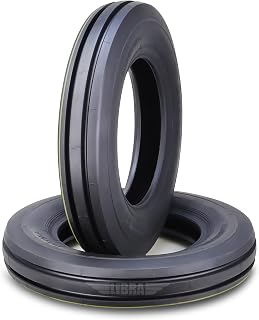
This set mirrors the F-2 rib pattern with two tires designed for paired front or back use. The two-tire package is marketed for consistent performance between tires, enhancing balance on tractors and implements. Best for buyers needing a matched pair for symmetric handling. A caution: ensure rim compatibility with both tires to avoid mismatched fit.
- Best for: Matched front or rear tire pairing on 4.00-12 rims.
- Why selected: Ensures uniform traction and steering with a single purchase.
- Limitation: May require separate rear/tire sets for full field tasks on larger plots.
Set of Two 4.00-12 Tri Rib Tires
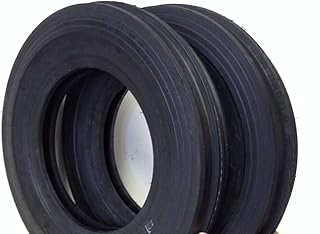
This package contains two tri-rib front tires in the F2 design, optimized for steering and maneuverability on light-duty tractors and farm implements. Best for ensuring precise control on compact equipment where front-end steering accuracy matters. A caution: tri-rib tires may wear unevenly if heavy front loads are repeatedly encountered on rough terrain.
- Best for: Front-wheel control on compact tractors and implements.
- Why selected: Tri Rib F2 design supports responsive steering and better load distribution at the front axle.
- Limitation: Not ideal for aggressive rear traction needs in muddy fields.
Buying Guide: Key Considerations For 4.00-12 Implement Tires
Choosing the right 4.00-12 tire involves assessing intended use, terrain, and machine configuration. The following questions help buyers compare options clearly.
- What pattern best suits my tasks? Front 3-rib or tri-rib patterns provide steering responsiveness and stable guidance. F-2 rib designs emphasize shoulder stability for equipment safety.
- Do I need tubes or tubeless? Some listings include tubes; consider rim compatibility and maintenance preferences for puncture protection and inflation reliability.
- What is my terrain? For rocky or hard-packed surfaces, a robust 4-ply construction can improve durability; for loose soil, rib designs with broader contact patches can offer better floatation.
- Is matching pair important? A matched front or rear tire pair improves balance and handling across implements, especially on compact tractors.
- What are the limitations? Some tires emphasize steering and stability at the expense of aggressive soil bite; plan for field tasks accordingly.
Frequently Asked Questions
- What does 4.00-12 mean? It refers to the tire width (4.00 inches) and wheel diameter (12 inches) for compatibility with small tractors and implements.
- Are tubes required with these tires? Some tires come with tubes; verify rim compatibility and installation requirements for your tractor model.
- What tread pattern is best for gardens? Front 3-rib or F-2 rib designs provide stable steering and gentle turns suitable for garden work.
- Should I buy a set or single tires? Sets ensure paired tires for balanced handling, particularly on front-wheel or matched rear-front configurations.
- Can these tires improve fuel efficiency? Stable tread patterns with proper inflation contribute to smoother operation and can marginally affect efficiency through consistent traction.
- What maintenance is required? Regular inspection for cuts, punctures, and tread wear; maintain proper air pressure per manufacturer guidelines.