Direct answer: A receiver hitch sand spreader is the best choice when you need hands-off, even material distribution using a standard 2-inch hitch on ATVs, UTVs, and trucks. This article highlights five practical options that balance capacity, durability, and ease of use for landscaping, winter maintenance, and farm tasks. Each product is chosen for its fit with receiver hitch systems, reliability in various seasons, and straightforward operation for contractors, property managers, and homeowners alike.
| Product | Best For | Why It Stands Out |
|---|---|---|
| Buyers Products UTVS16 | ATVs and UTVs in year-round use | Large 150 lb capacity, adjustable flow, universal 2″ hitch mount |
| SaltDogg TGS03 Tailgate Spreader | Truck owners needing tailgate mounting | 8 cu ft capacity, durable hopper, quiet electric drive |
| 2″ Receiver Mount Bracket | ATV/utility spreads | Simple, sturdy hitch adapter for dry material spreaders |
| Fimco 2″ Receiver Mount | ATV/UTV spreaders | Compact, compatible with ATV spreaders |
| SaltDogg TGSUV1B | SUVs and pickups for residential use | Lightweight, gravity feed with electric drive option |
Buyers Products UTVS16 150 lb UTV/ATV Receiver Mount Spreader

Best for: UTVs, ATVs, and small tractors that need year-round material spreading. The 150 lb capacity minimizes refills during larger jobs, while the poly hopper resists corrosion from salt and fertilizers. Choose this if you prioritize wide coverage and a straightforward hitch installation.
Why selected: The wide coverage and adjustable flow control are designed for consistent distribution at various speeds. The receiver hitch mount simplifies mounting on standard 2″ hitches, making it a versatile solution for property maintenance, farming, and groundskeeping needs.
Caution: Ensure your vehicle’s hitch weight rating supports the added load, especially on smaller ATVs or UTVs during heavy use.
SaltDogg TGS03 Tailgate Salt Spreader

Best for: Truck owners who want a tailgate-mounted option with substantial salt storage. The 8 cubic foot hopper provides ample room for bulk materials, making it suitable for continuous winter maintenance or large driveways.
Why selected: This model emphasizes a durable, corrosion-resistant hopper and a quiet electric drive, which reduces daily maintenance while maintaining steady operation. It’s a solid choice when mounting to trucks and seeking reliable performance in cold-weather tasks.
Caution: Tailgate mounting may be less flexible than hitch-mounted designs in tight spaces or limited trailer clearances; verify clearance before use.
2″ Receiver Hitch Mount Heavy Duty Carbon Steel Bracket

Best for: DIY installations where a reliable, sturdy mounting point is needed for ATV/dry material spreaders. A simple, robust bracket can extend compatibility for various spreader models.
Why selected: Carbon steel construction offers solid strength with long-term durability under rough field conditions. This option is practical for users who want to adapter-match multiple spreaders to a single hitch setup.
Caution: Verify exact hole spacing and load limits to ensure compatibility with your specific spreader and hitch class.
Fimco 5301901 2″ Receiver Mount For ATV DMS-12V
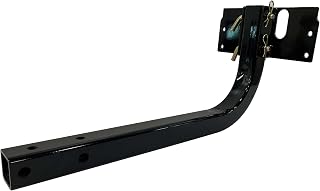
Best for: ATV users seeking a direct, compact receiver mount for dry material spreaders. This is suitable for smaller jobs and tight workspaces where a built-in SUV or truck mount is unnecessary.
Why selected: The dedicated ATV mount provides a clean integration path with standard 2″ receivers and is a practical option for light- to mid-duty spreading tasks.
Caution: Limited capacity may not satisfy large-area applications; plan refills accordingly to avoid downtime during work sessions.
SaltDogg TGSUV1B Tailgate Salt Spreader

Best for: Residential use with SUVs or pickup trucks that require a compact, easy-to-mount spreader for driveways and sidewalks. This is a lighter option with straightforward installation.
Why selected: The gravity feed design simplifies operation, and the 12V electric drive option adds ease for consistent material flow without manual effort. It’s a practical choice for homeowners and small-property managers.
Caution: Suitable for lighter loads; for heavy, frequent winter use, a larger capacity model may be more efficient.
Buying Guide: Key Considerations When Choosing a Receiver Hitch Spreader
- Vehicle compatibility: Check hitch size (2-inch is standard) and payload capacity to ensure safe mounting and use.
- Capacity needs: Estimate material volume per session. Larger jobs benefit from 8–15 gallon (or higher) hoppers or bucket capacities.
- Power and drive: Electric drives (12V) reduce manual effort but verify battery availability and the vehicle’s electrical load.
- Material versatility: If you spread salt, fertilizer, seed, or feed, choose a model with adjustable flow and a hopper compatible with corrosive materials.
- Mounting style: Hitch-mounted options offer flexibility on ATVs and UTVs, while tailgate mounts suit trucks. Some models also allow multiple mounting configurations.
- Durability: Look for corrosion-resistant materials (poly hoppers, powder-coated metal) and robust brackets to withstand winter and outdoor use.
- Ease of installation: Favor designs with straightforward mounting holes and standard tool requirements for quick setup.
Frequently Asked Questions
- What is a receiver hitch spreader best used for?
It is ideal for distributing salt, fertilizer, seed, or feed from a hitch-equipped vehicle, enabling even coverage on driveways, lawns, and fields. - Can I mount a spreader on any 2-inch hitch?
Most 2-inch hitch mounts are compatible, but always verify weight limits and mounting hole patterns for your specific spreader model. - Is a tailgate spreader different from a hitch-mounted one?
Tailgate spreaders mount to the tailgate of a pickup or SUV, while hitch-mounted spreaders attach to the vehicle’s receiver hitch. Tailgate units are common for residential use; hitch mounts are versatile for ATVs and UTVs. - Do these spreaders require electricity?
Some models use a 12V electric drive to feed material; others are gravity-fed or manual. Electric drives reduce effort but require power considerations. - What materials can be spread with these units?
Many are designed for salt, fertilizer, seed, and feed. Always confirm hopper compatibility with abrasive or corrosive materials. - How often should I refill the hopper?
This depends on the capacity and the size of the spreading area. Larger hoppers minimize refills during long jobs.